
The History and Intention of Props
The idea that yoga props are a modern convenience, or a concession for beginners is historically and scientifically inaccurate. Props entered yoga practice because teachers observed something critical: alignment, breath, and nervous system regulation tend to break down well before the flexibility runs out.
Table of Contents
When we say flexibility runs out, we’re talking about the end of available range of motion in a joint or tissue. The point where:
- muscles and connective tissue have reached their current extensibility
- joint structures are approaching end-range loading
- further movement would require compensation elsewhere
In other words, the body has reached the limit of what it can safely lengthen in that moment.
What teachers observed (and what science now confirms) is this:
Long before a practitioner reaches their true flexibility limit, other systems fail first.
Specifically:
- Alignment breaks down joints lose centration, load shifts unevenly
- Breath becomes disrupted shallow, held, or forced breathing emerges
- The nervous system activates a threat response increased muscle tone, bracing, guarding
This happens before muscles are fully lengthened.
So the issue isn’t that someone “isn’t flexible enough.”
It’s that the body detects instability or excessive load and intervenes.
This is why forcing depth without support leads to:
- joint strain
- compensatory movement patterns
- chronic tightness (as a protective response)
- eventual injury or burnout
In classical yoga texts, āsana is defined by steadiness and ease. When either is missing, the posture is no longer serving its ideal purpose. Over time, teachers observed that unsupported joint loading and tissue compression disrupted alignment, breath quality, and nervous system regulation, even before flexibility limits were reached.
This is where props changed everything.
The historical Shift Toward Supported Alignment
In the mid-20th century, B. K. S. Iyengar began systematising the use of blocks, bolsters, belts, chairs, and wall support. Not to make postures easier, but to help people experience the most true or full experience of a posture.
Iyengar observed that:
- unsupported joints fatigued early
- spinal alignment degraded under strain
- breath patterns became shallow or irregular
- students compensated with excess muscular tension
Props were introduced to remove the compensations, not the work.
In the Iyengar tradition, the progression of practice was never about how deeply or how long a posture could be held. It began with correct action in the body (what we now commonly call alignment) so that joints were organised, load was distributed safely, and unnecessary strain was removed. Only once the body was structurally stable could the breath become refined and regulated, as disturbed or laboured breathing was understood to be a clear sign of imbalance or over-effort. Duration, then, was never the goal but the outcome: time in a posture was extended only when both alignment and breath could be maintained with steadiness and ease. This is why Iyengar systematised the use of props. Not to simplify postures, but to make it possible to sustain them intelligently, without compromising breath, nervous system regulation, or long-term joint health.
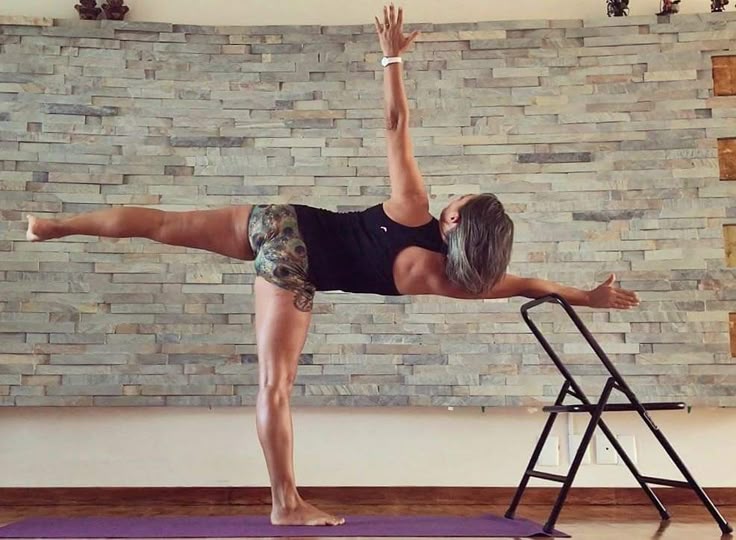
For example, using a Chair to explore precision and depth in yoga practice:
What the Science Now Confirms
Modern biomechanics and neurophysiology back this up.
When joints are poorly supported:
- proprioceptive feedback becomes unreliable
- stabilising muscles overfire
- global tension increases
- the nervous system interprets threat
This leads to guarding, breath restriction, and early fatigue.
Props directly counter this by:
- improving joint stacking and load distribution
- enhancing proprioceptive input (especially through hands and feet)
- reducing unnecessary muscular co-contraction
- allowing parasympathetic regulation to occur
In short: the body can only relax when it feels mechanically safe.
How Specific Props Change the Practice
Blocks (see our full range of Yoga Blocks here)
Blocks reduce end-range joint stress and restore vertical organisation. In standing poses, they shorten lever arms and allow the pelvis and spine to align without torque. This supports biomechanical precision.
Bolsters (see our full range of Yoga Bolsters here)
Bolsters support the body’s weight so postural muscles can disengage. This is essential for vagal tone and nervous system down-regulation. Without adequate support, restorative postures often remain subtly effortful and fail to produce their intended effect.
Mats (see out full range of Yoga Mats here)
Grip and cushioning affect proprioception more than flexibility. A slipping hand or unstable foot increases neural drive to stabilising muscles, which raises tone throughout the body. A stable mat reduces background tension and improves movement efficiency.
Why Experienced Practitioners use More Props, not Fewer
As practice matures, the goal shifts:
- from depth → clarity
- from intensity → sustainability
- from achievement → longevity
Props allow the practitioner to stay inside optimal ranges of load, sensation, and breath, which is where adaptation actually occurs. This is why long-term practitioners, teachers, and therapists often practise with more support over time, not less. A practice that respects anatomy and nervous system function is a refined practice. This week, consider not how much you practice, but how well your body is being supported while you do.
🌱 Ready to transform your practice? Shop for your ultimate setup at Yoga King Products → head to Yoga-King.com