
The Real Skill in Wheel Pose Isn’t How Deep You Go. It’s How Well You’re Supported.
Wheel Pose (Urdhva Dhanurasana) has a reputation. It’s often seen as a milestone backbend: dramatic, energising, and for many students, a little intimidating. In real-life practice, though, the goal isn’t depth or bravado. It’s creating a backbend that feels strong, spacious, and repeatable over time. Table of Contents
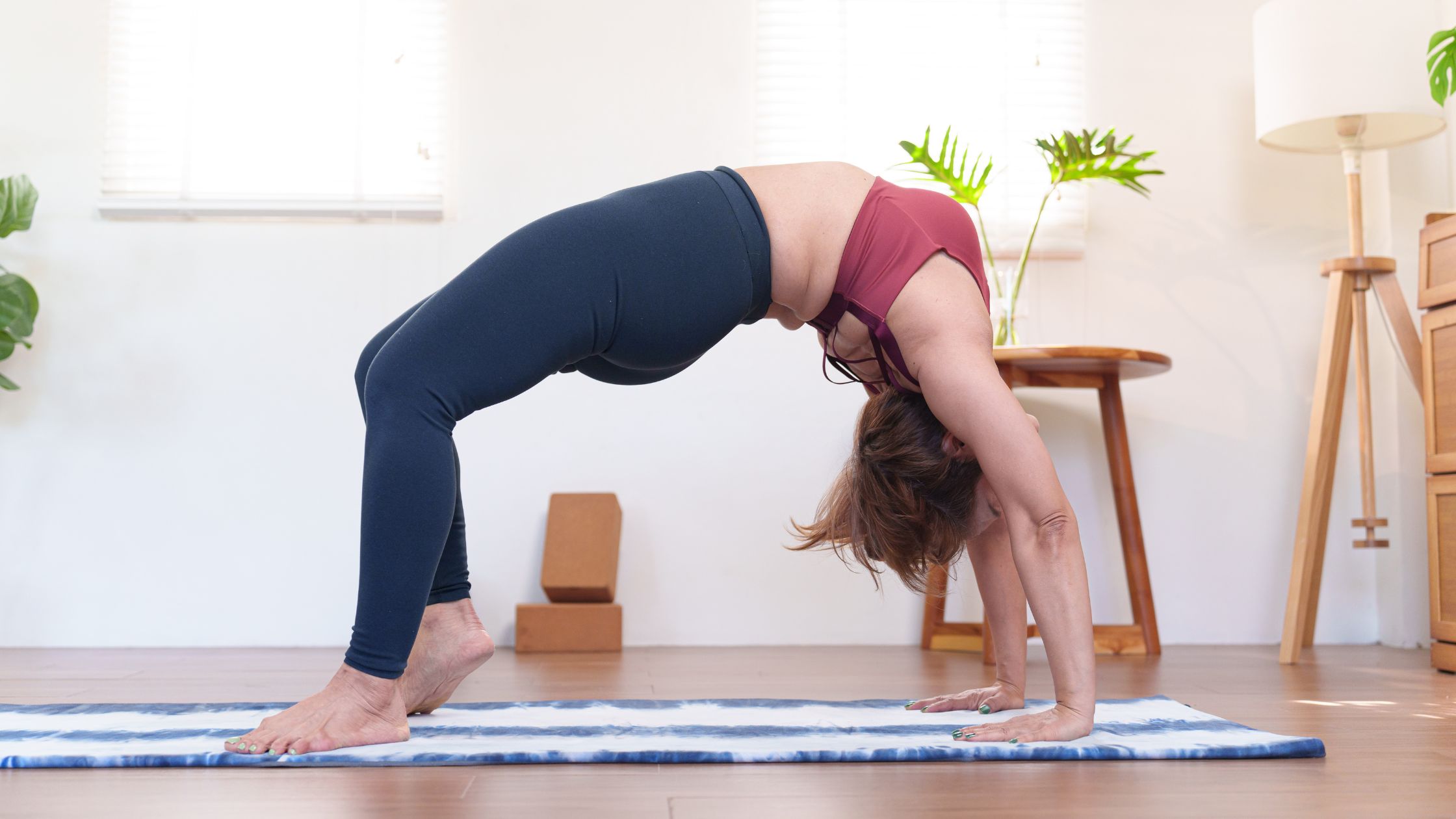
The difference between a nourishing Wheel and a cranky lower back usually comes down to two things: how evenly the spine is bending, and how much support the rest of the body is providing. This is where intelligent prop use and a steady, breath-led approach make all the difference.
Even Curves Beat Extreme Shapes
One of the most common mistakes in backbending is forcing range where the body already moves easily, usually the lower back, while the stiffer areas (upper back, hips, shoulders) stay relatively ‘stuck’ at their same limited comfortable range. This creates a sharp hinge in the spine instead of a smooth arc, which can load the lumbar spine and sacroiliac joints unnecessarily.
A healthier Wheel spreads the work across the whole body. The legs ground and lift. The chest opens gradually. The shoulders organise and support the arms. When everything contributes a little, no single area has to do too much or over extend.
When practicing, it’s important to think less about “how far” you bend, and more about where the bend is happening.
Why Props Matter (Even for Experienced Practitioners)
Props are tools for feedback, safety, and longevity, especially in poses like Wheel.
A yoga strap looped just above the elbows can prevent the arms from splaying out, which helps protect the shoulders and wrists. A block between the feet can keep the legs parallel and engaged, reducing strain in the lower back. Even practising Wheel close to a wall can help you stay upright through the chest rather than collapsing backward.
For teachers, props also offer a clear, accessible way to cue students without overwhelming them with anatomy. A strap or block often communicates alignment more effectively than words.
Start Where the Body Can Learn Safely
Before worrying about dropping back or pressing up fully, it’s worth spending time in preparatory versions of Wheel. Coming up from the floor with bent arms, or pausing with the crown of the head lightly touching the mat, allows students to organise the legs, hips, and shoulders without rushing.
This slower approach builds awareness and confidence – two things that matter far more than flexibility when it comes to safely and consciously practicing backbends.
If the breath becomes strained or the neck and lower back feel compressed, that’s useful information and feedback on how to adjust, realign, or seek further preparation and drills in support of ongoing practice of the pose. Wheel Pose isn’t meant to feel aggressive. The nervous system should feel alert but steady, not braced or panicked.
Legs Do More Than You Think
In strong, sustainable backbends, the legs are doing a surprising amount of work. Pressing evenly through the feet, keeping the thighs parallel, and allowing the backs of the legs to lengthen helps lift the pelvis without gripping the glutes.
When the legs are engaged well, the spine has room to extend rather than jam. This is especially important for students who feel Wheel almost entirely in their lower back — a common experience that usually signals under-supported legs and hips.
Trust, Not Force, Is the Real Progress
For many students, Wheel brings up fear — of falling, of pain, of “not being able to do it properly.” That fear isn’t a weakness or lack of ability; it’s often the body’s early warning system. When we pause and listen rather than override it by pushing through, we’re more likely to notice where support is missing — in the legs, the shoulders, the breath, or the setup itself. Responding to fear with curiosity instead of force helps prevent strain, builds trust in the body, and creates a backbend that can be practiced consistently over time, not just achieved once.
Progress in Wheel doesn’t always look like a deeper backbend. Sometimes it looks like steadier breathing, better leg support, or choosing to use a prop. From a teaching perspective, that kind of progress is far more valuable than striving for immediate depth or advanced variations.
A Smarter Way Forward
Whether you’re a student rebuilding confidence in backbends or a teacher guiding others through them, Wheel Pose is best approached as a long-term relationship, not a one-off achievement. Support the body well, use props generously, and let strength and openness develop together.
A good Wheel doesn’t demand trust — it earns it, one well-supported breath at a time.
Props That Support Safer Backbending
Backbends don’t need to be forced, they need to be supported. Simple tools can make Wheel Pose more accessible, stable, and sustainable for both students and teachers.
• Yoga blocks to maintain parallel legs, support lift, and reduce compression
• Yoga straps to keep the arms and shoulders aligned and prevent over-strain
• Alignment mats to provide visual feedback for foot placement, symmetry, and weight distribution
Using the right props allows the body to open gradually and intelligently — so your backbends feel strong, spacious, and repeatable over time.
Check out these video tutorials for inspiration:
🌿 Explore Yoga King’s yoga props → https://www.yoga-king.com/props.html