
From sitting and standing to walking, lifting, and practicing on the mat, our hips work hard every day, and many of us carry far more tension there than we realise.
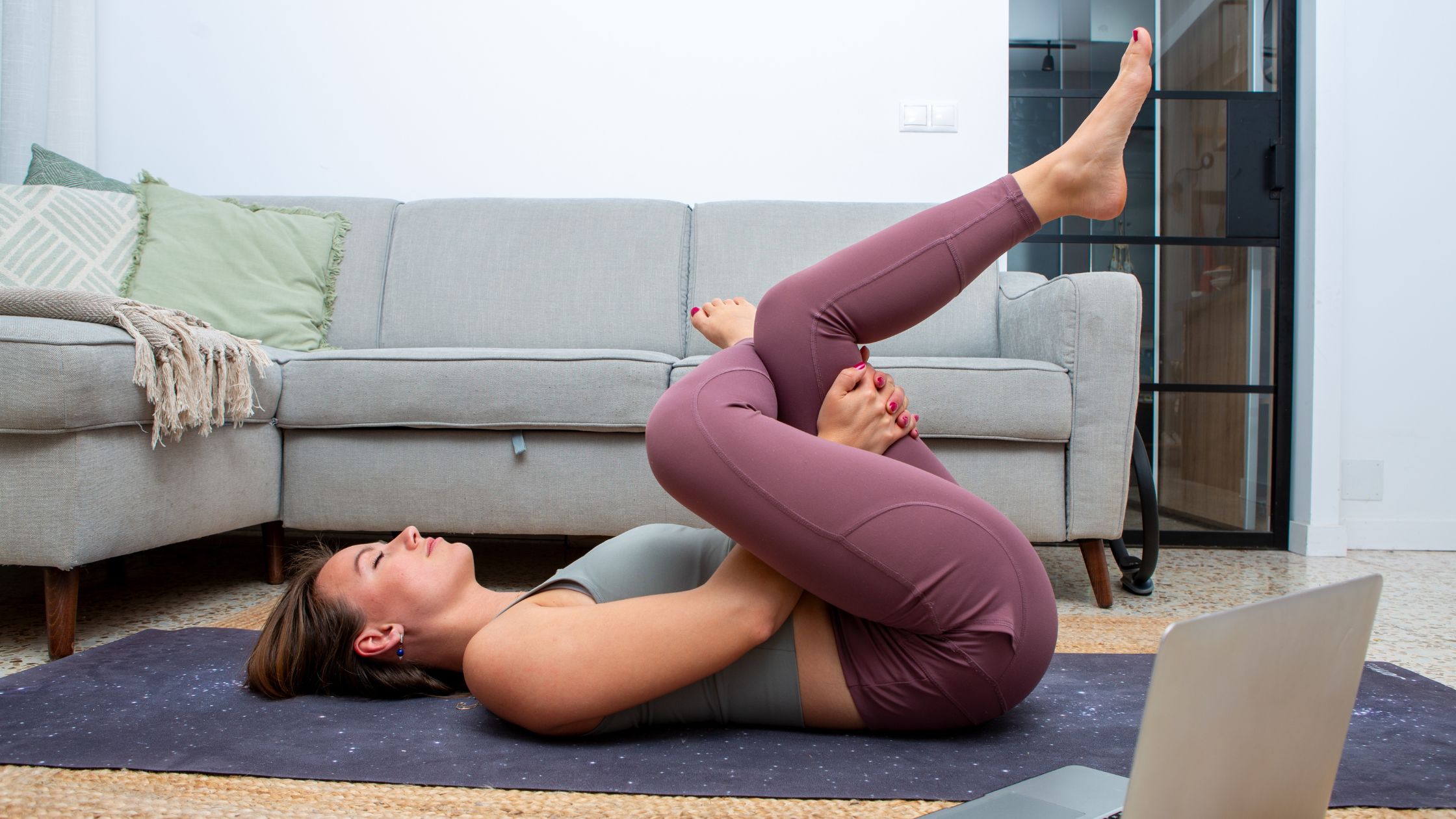
Table of Contents
From long hours seated at desks, behind the wheel, or curled over devices, our hips spend much of the day held in flexion. Over time, this repetitive positioning can leave the muscles around the pelvis feeling shortened, restricted, and underused through their full range. The result is something many practitioners know well: tight hip flexors, stiff glutes, cranky lower backs, and a lingering sense of heaviness through the pelvis and legs.
Healthy hips, however, are not simply “loose” hips. They are strong, supple, and capable of moving well in every direction.
The hip joint is one of the body’s great architectural marvels: a ball-and-socket joint designed for remarkable freedom of movement. Unlike hinge joints such as the knee or elbow, the hips are built for flexion, extension, abduction, adduction, and both internal and external rotation. In yogic terms, this means healthy hips support everything from steady standing postures and deep seated folds to balanced inversions and comfortable meditation.
When mobility is limited, the body often borrows movement elsewhere. The lower back compensates. Knees twist under load. Posture shifts. Breath becomes shallower. Even walking mechanics can subtly change.
This is why hip opening practices are important – not as a pursuit of dramatic flexibility, but as a way of restoring balanced function.
A thoughtful hip-opening practice should address more than one stretch. The hips need movement in multiple planes. Forward folds and lunges lengthen the posterior chain and hip flexors. External rotation shapes such as Baddha Konasana and Gomukhasana create space through the outer hips and gluteal complex. Internal rotation is equally important for joint health and gait mechanics. Gentle twisting and controlled rotational work help nourish the capsule of the joint and maintain balanced range.
Stretch biomechanics also matter.
Muscles respond best to slow, sustained loading rather than aggressive forcing. When we move gradually into sensation, breathe steadily, and allow the nervous system to soften its protective guarding, tissue can adapt more intelligently. Often what we interpret as “tightness” is not short muscle tissue at all, it is nervous system resistance, guarding joints it perceives as unstable or overworked.
For this reason, the best hip openers combine release with strength.
A supported low lunge builds resilience while lengthening the iliopsoas and rectus femoris. A strong bridge pose teaches glute activation, helping rebalance the front and back of the pelvis. Controlled standing balance postures improve hip stability in single-leg stance, which is one of the most functional patterns we use every day when walking, climbing stairs, or changing direction.
Yoga props can make this work significantly more effective. A firm bolster under the pelvis in restorative shapes allows our body to settle and relax. Blocks beneath the hands in lunges create a more spacious experience and alignment. Blankets under knees reduce compression and encourage longer, more relaxed holds. Often, it’s comfort is that allows the deepest release.
For yoga teachers, hip-opening classes are an opportunity to educate beyond sensation. Cueing pelvic position, femur alignment, and breath mechanics transforms a simple stretch into embodied movement education. This invites students to begin understanding their bodies on a deeper level, moving beyond the experience of the feeling of the stretch. Because healthy hips are more than flexibility.
5 Hip Opener Exercises for Healthy Hips
Healthy hips respond well to variety. Because the hips are ball-and-socket joints with movement available in multiple directions, a balanced practice should include extension, flexion, rotation, and supported release. Rather than forcing intensity, think of hip opening as creating spaciousness, restoring natural mechanics, and gently encouraging the tissues around the pelvis to soften, strengthen, and move well.
These five exercises offer a well-rounded approach, combining active stretching, supported restoration, and intelligent mobility work.
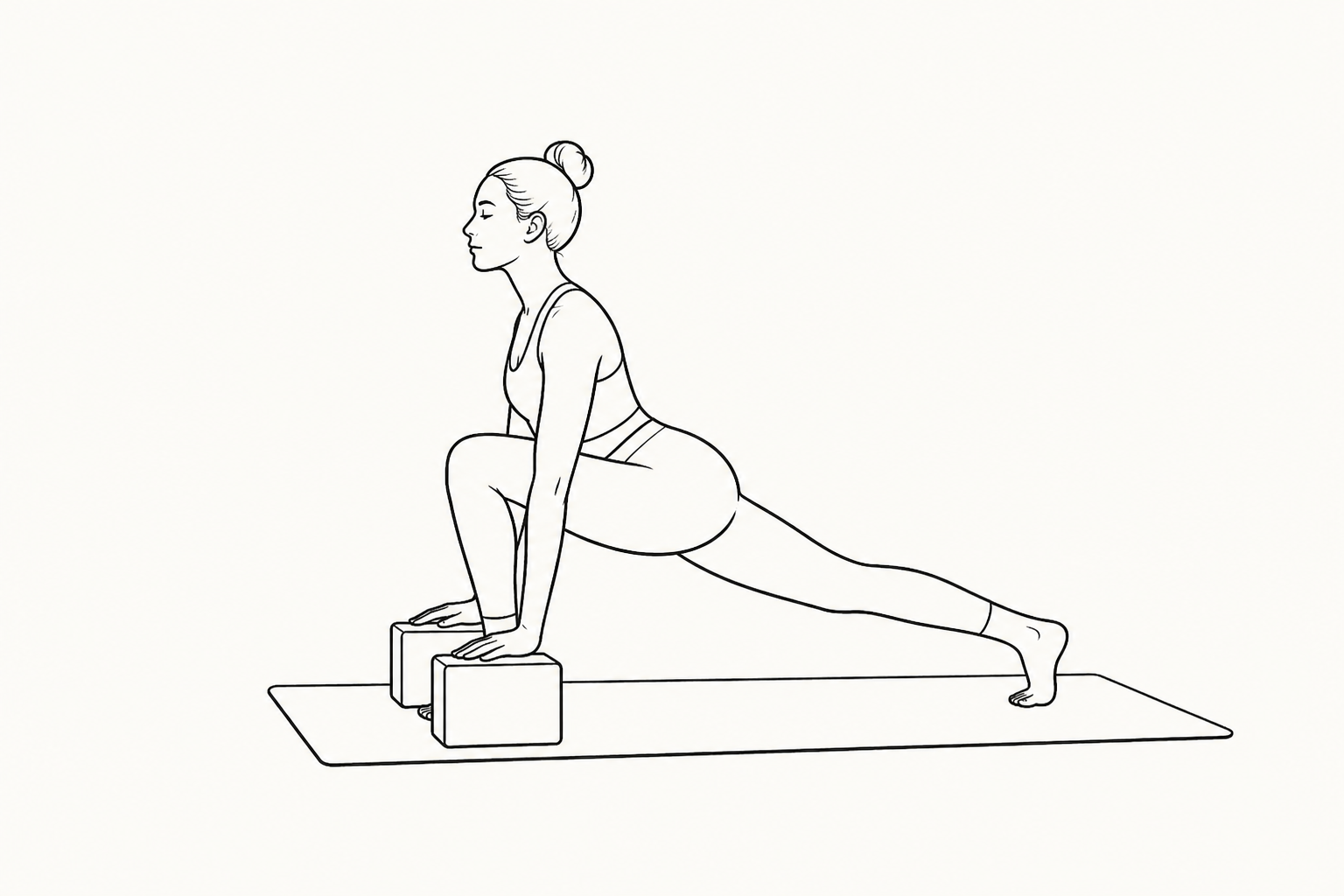
1. Low Lunge with Blocks (Back Knee Lifted)
This variation is a powerful opener for the front body, particularly the hip flexors, most notably the iliopsoas and rectus femoris, which tend to shorten with prolonged sitting. Elevating the hands on blocks creates more space through the spine and pelvis, while lifting the back knee adds active load through the rear leg, increasing intensity and encouraging strength through the glutes and hamstrings.
The magic of this pose lies in opposing forces: the back heel reaches away while the chest broadens forward, creating length through the entire body.
Practice Tip: Avoid dumping into the lower back. Draw the lower ribs gently inward and think of lengthening through the crown of the head as much as reaching through the back heel.
2. Supported Supine Hip & Sacral Release
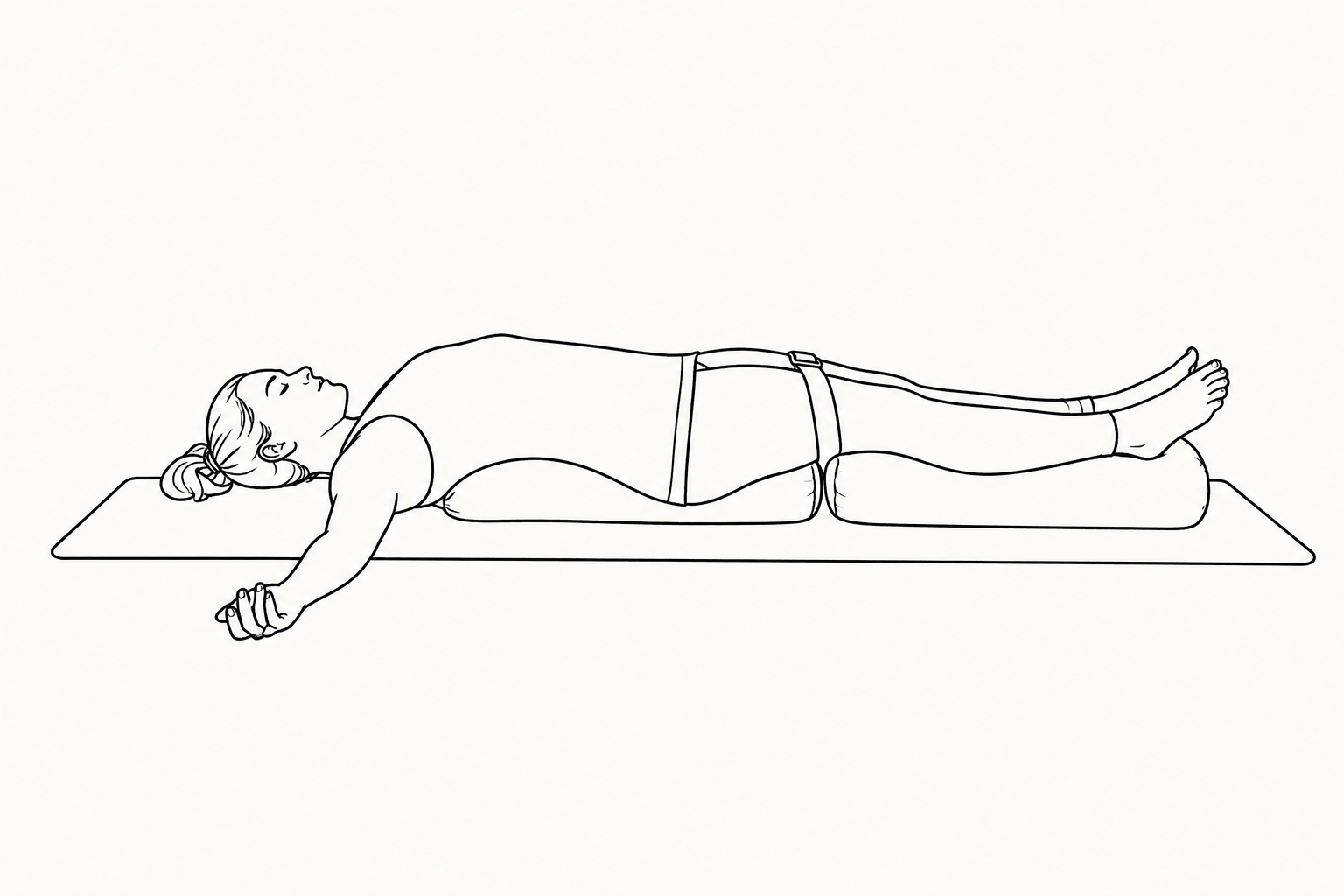
Sometimes the hips do not need deeper stretching, they need support. This restorative setup offers gentle decompression through the pelvis, lower back, and hip joints, creating a subtle release that can feel profoundly relieving for practitioners carrying tension through the sacrum, lumbar spine, and deep hip stabilisers. With the spine supported by a bolster and the legs comfortably elevated, the pelvis is encouraged into a more neutral resting position, helping reduce gripping in the hip flexors, glutes, and lower back musculature. The strap around the hips and feet adds a sense of containment and grounding, allowing the legs to soften fully without effort.
From a biomechanical perspective, this shape reduces compressive load through the lumbopelvic region while encouraging passive length through the front of the hips and a gentle broadening across the sacrum. It can be particularly beneficial for those who spend long hours sitting, feel “jammed” through the lower back, or experience a sense of tightness deep in the hips that active stretching does not always resolve.
This is less about opening the hips through intensity, and more about creating the conditions for release.
Practice Tip: Set up the props so the pelvis feels completely supported rather than tipped forward or back. Comfort matters most here. When the body feels safe, the hips soften naturally. Stay for 3–10 minutes and allow gravity, breath, and stillness to do the work.
3. Supported Reclined Hero Pose
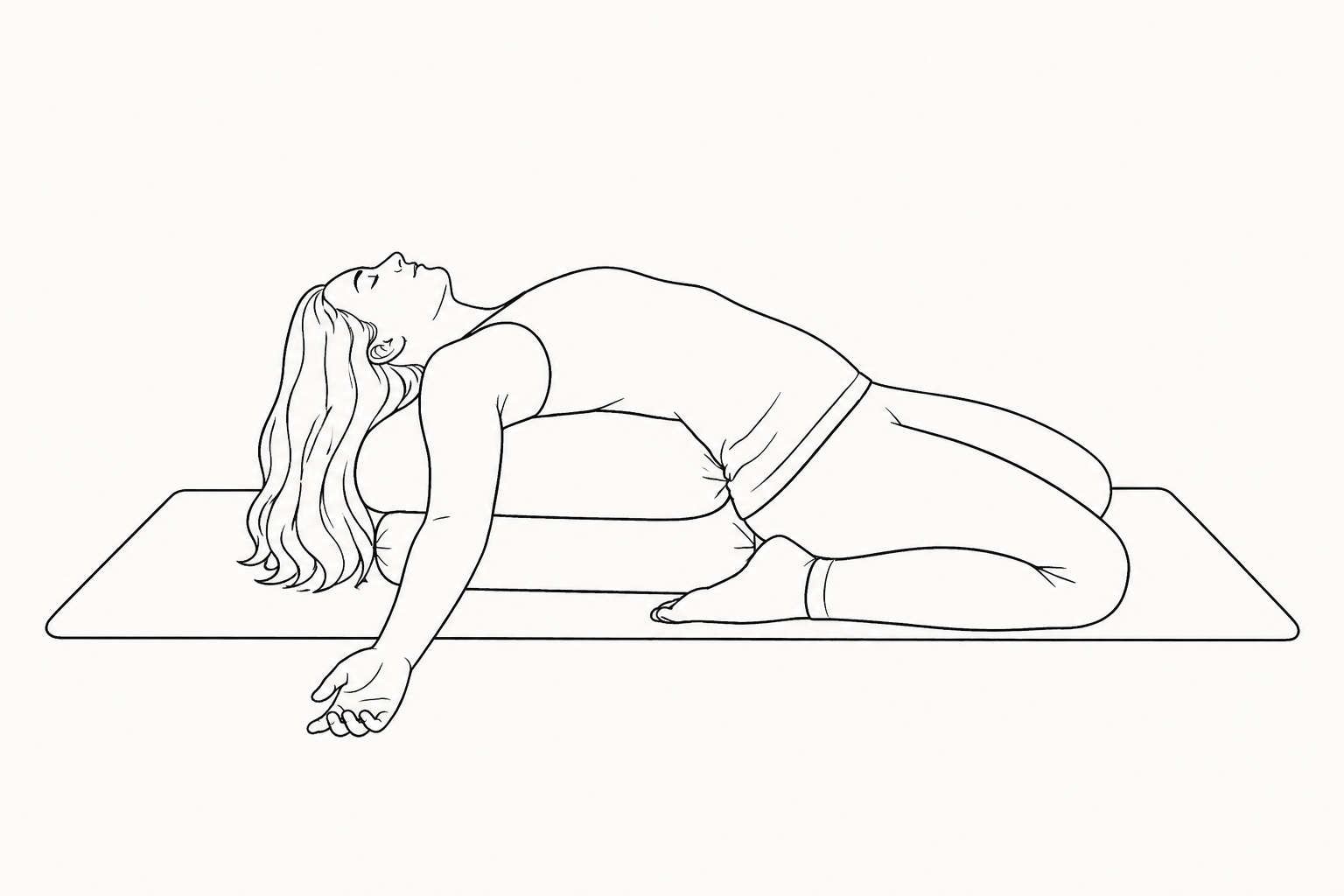
A beautiful release for the front thighs, hip flexors, ankles, and fascial lines running through the quadriceps and abdomen, Supported Hero offers a gentle backbend combined with deep lower-body opening. Reclining over stacked bolsters reduces load on the knees while allowing the pelvis and front body to gradually open.
This shape can often relief for people who feel compressed through the front of the hips from sitting, cycling, or strength training.
Practice tip: Always assess knee comfort first. Extra height under the seat or more bolster support can make this pose far more accessible.
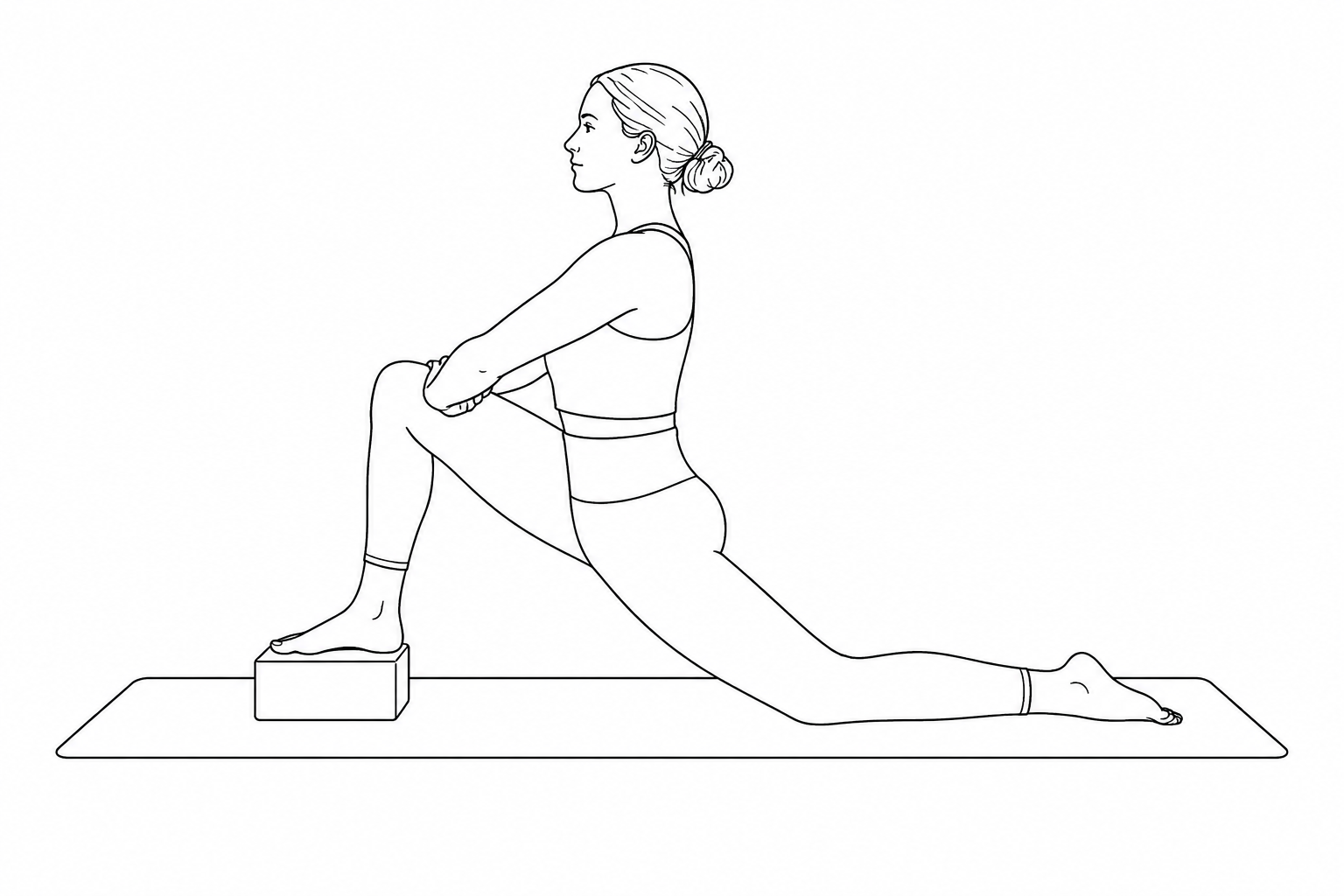
4. Elevated Front Foot Lunge
Placing the front foot on a block changes the mechanics of the lunge, increasing range through the front hip crease and allowing a slightly deeper angle through the pelvis. It can also create more space for the practitioner to settle into the stretch with better alignment.
This variation is especially effective for targeting the psoas, adductors, and deeper stabilising tissues around the hip joint.
Practice Tip: Keep the pelvis square and steady. Depth is less important than creating clean, controlled length through the hips. For people with hypermobile hips, be mindful not to overstretch, keeping your hips in alignment.
5. Supine Figure Four Stretch
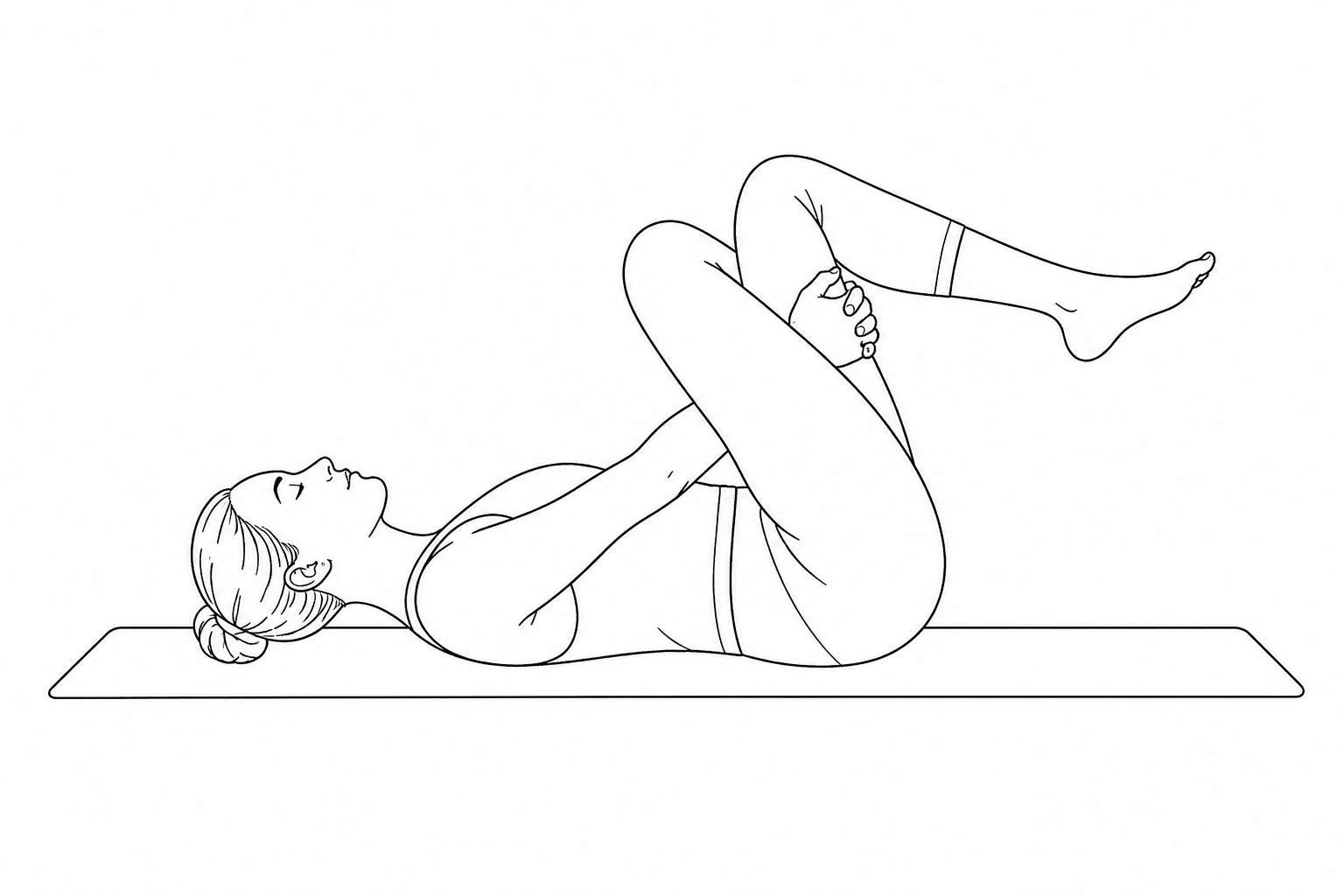
Simple, accessible, and highly effective, Figure Four targets the outer hip complex, particularly gluteus maximus, gluteus medius, piriformis, and deep lateral rotators. For many practitioners, these tissues become dense and restricted from long periods of sitting or repetitive movement patterns.
Because the spine is supported by the floor, the body can relax into the stretch without compensating elsewhere.
Practice Tip: Keep the flexed foot active to support the knee, and rather than pulling aggressively, focus on slow breathing and allowing the hips to gradually release.
Taken together, these five movements offer a complete approach to hip mobility by opening the front body, releasing the outer hips, restoring pelvic balance, and supporting healthy movement patterns that translate beautifully into both yoga practice and daily life.
Healthy hips support posture, protect the spine, improve gait, reduce unnecessary tension, and help us move through life with greater ease. In yoga practice, opening the hips is not simply about range. It is about creating space where the body has been bracing, and restoring intelligence where movement has become restricted.
And that changes everything, from the quality of our practice to the ease of everyday movement.
Explore Yoga King’s range of bolsters, blankets, blocks, and supportive props designed to help you move, release, and practice with greater comfort and depth.