
Boost energy, look younger and appear taller – with your yoga practice
The moment you read the word posture you can’t help but sit up a little taller, relax your shoulders and draw in your belly! With our fast-paced, high pressure and sedentary lifestyle it’s so easy to start the slump and adopt poor postural habits – but we all know that a good posture can make a huge difference to how we look and feel.
And with so many of us working from home, our make-shift offices may not have the best ergonomically designed desks and set-up. Meaning you are more likely to need a reset than your laptop!
Luckily good posture is one of the many benefits of a regular yoga practise.
Every yoga asana (pose) when practiced with correct spinal alignment will help promote good posture.
And not only can a good posture help you look taller (and younger!) but it also helps to clear your mind, ease muscle tension and can boost your energy. Other benefits include better respiratory function, promoting good blood flow and circulation to the nerves and blood vessels which will support your muscles, tendons and ligaments.
It will also mean you are less likely to fatigue and endure tension-related pain – particularly in your neck, back and shoulders.
It’s a good idea to occasionally check your posture: stand directly in front of a mirror in Tadasana (mountain pose), with your feet hip distance apart and parallel, notice if your shoulders and hips are level – or is one side higher than the other? Is your spine long – notice the natural curves in the spine.
Then turn and check out your profile – are you rounding your shoulders or poking out your chin? Aim to balance out the body and get to know your postural habits.
Seven ways yoga helps posture
1: Yoga asanas (postures) help us connect with our body so we become more aware of poor postural habits and spinal alignment.
2: Some yoga poses such as Ardha Matsyendrasana – seated spinal twist, (see below for guide) help to strengthen the back muscles which support our spine and aid good posture.
3: Yoga practices such as Guided Relaxation, Restorative Yoga and soothing pranayama (breathing techniques) can elicit the Relaxation Response which ease us into a state of deep relaxation and helps the body to release muscular tension
4: Yoga also encourages good balance – another key aspect of posture. Many yoga poses involve balancing on one leg or creating an even distribution of weight between the hands and feet. As well as helping to channel awareness and focus in the mind.
5: In classes you will notice the teacher often refers to postural cues such as broadening the shoulders, drawing in the chin to lengthen the back of the neck and to stand with the weight evenly centered between both feet. These cues are all designed to help us become more aware of our alignment and to remind us to engage good postural habits.
6: Practices such as Bandhas (locks) help to boost core strength – which is important to support and protect our spine and to help us feel centered and grounded.
7: Yoga helps us to become more flexible which reduces stiffness and makes us feel more comfortable in our body.
Three poses to help promote good posture
All yoga poses will aid posture, but the following shapes are particularly good for releasing muscle tension associated with poor posture and for realigning the spine. It’s a good idea to use props in your practice, such as straps, blocks and blankets to help support the body.
Ardha Gomukhasana (arms only)
You may need a blanket and a strap
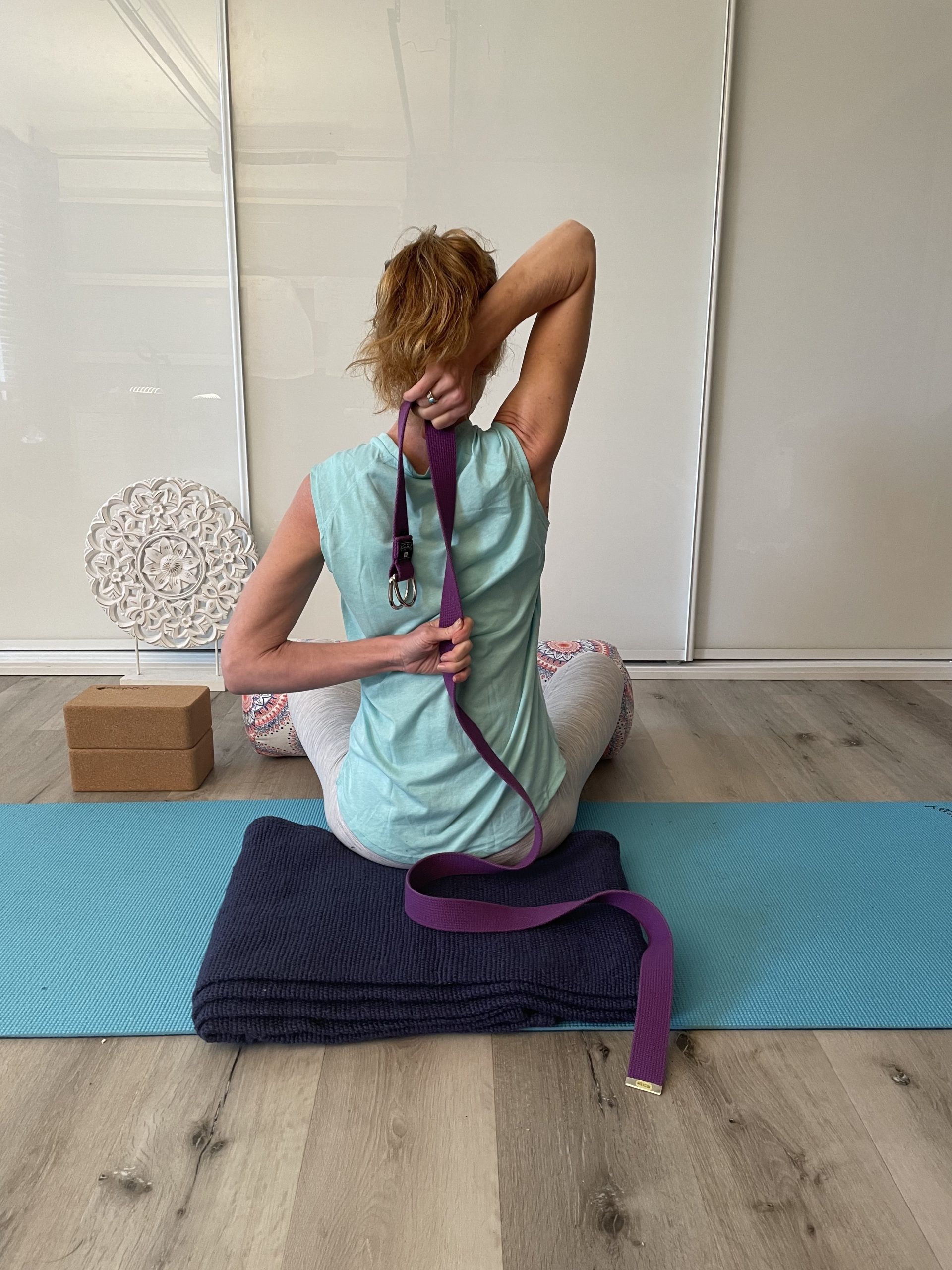
Sit comfortably on the edge of a blanket, take a strap in your right hand and raise the arms above the head, take hold of your opposite elbows and relax your shoulders away from your ears. Take a couple of breaths here.
If you wish to move more deeply into the pose, then begin to move your right hand and fingers between the shoulder blades, keeping your left hand on your right elbow – remain here or release your left arm and hold on to the strap with your left hand. You can gradually move your hands towards one another holding the strap. Keep your gaze forward, shoulders relaxed, maintain length of your spine and neck and gently engage your core.
Ardha matsyendrasana – half seated spinal twist
You may need a blanket
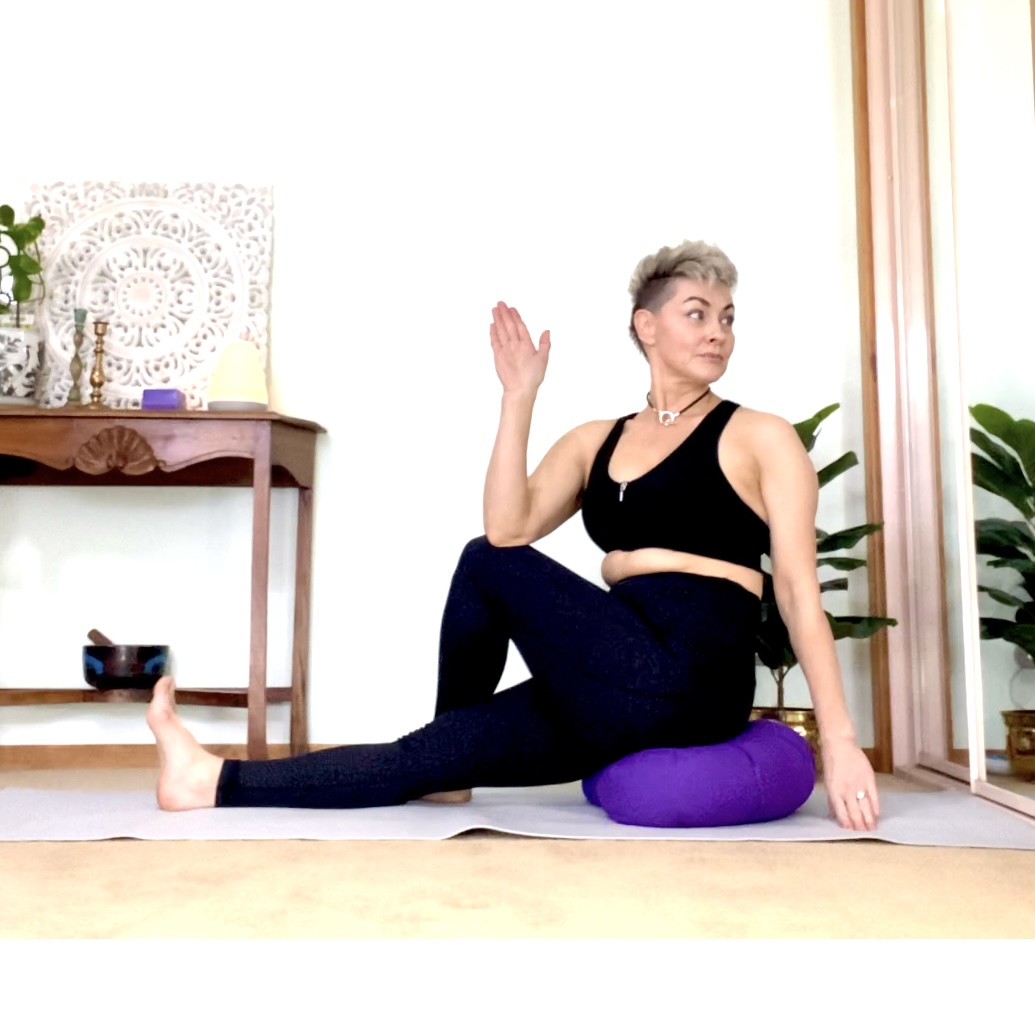
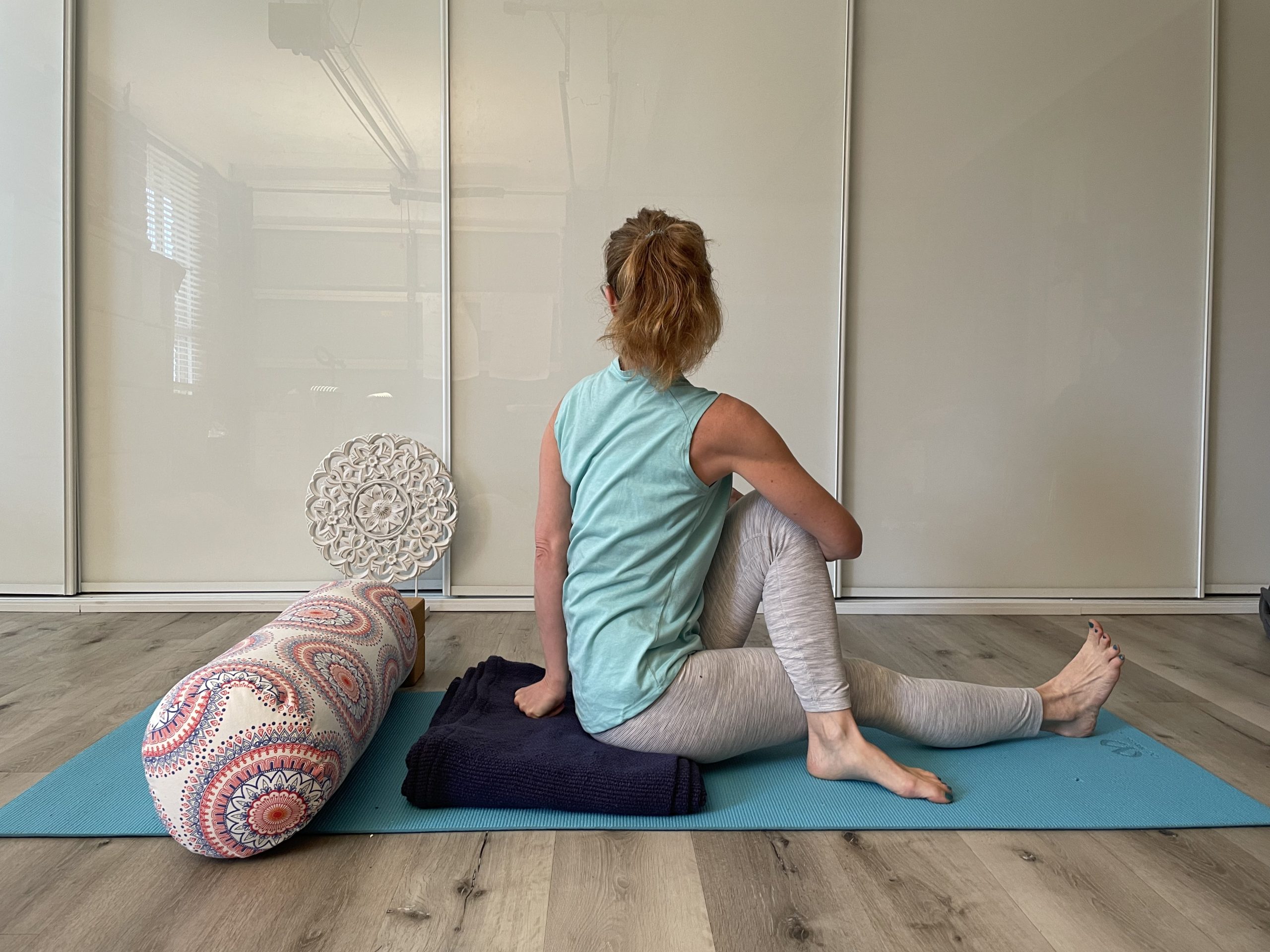
Start in Dandasana (you may like to sit on the edge of a blanket), bend the right leg, either keep the foot there or place the right foot on the mat beside the left thigh. (Remember to always work gently and within your comfort levels during your practice).
Sit up tall and then raise the left arm and hug right knee close into the body.
Place the right hand behind the base of the spine and slowly turn to the right, keeping shoulders level and spine tall, move head last of all.
Hold for three breaths, release slowly on an exhale and repeat to the other side.
Restorative Yoga pose: Mountain brook
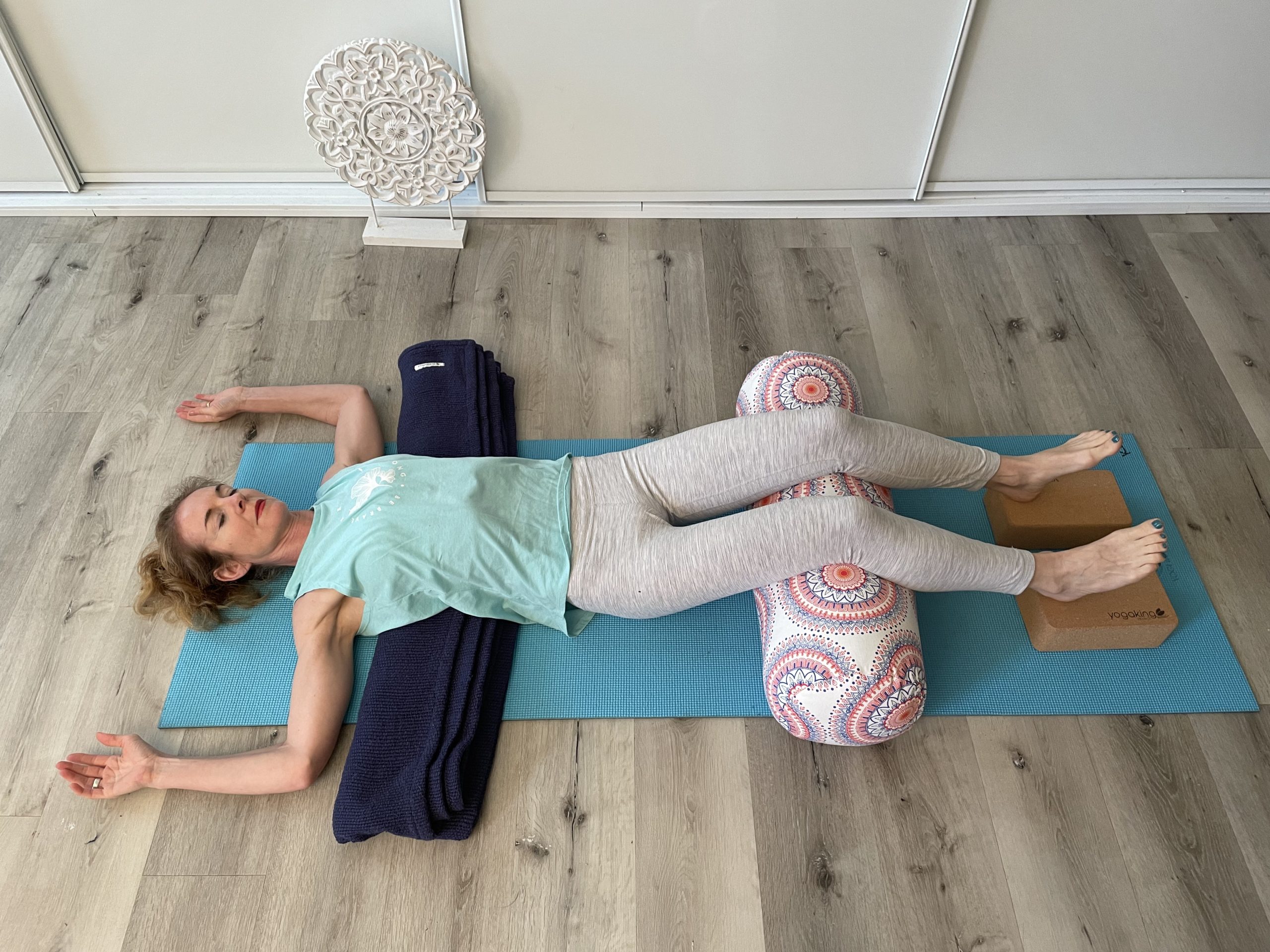
You will need a bolster, 2 x blankets, 2 x blocks and an eye pillow
This pose is inspired by Restorative Yoga teacher, Judith Lasater and helps to gently open the heart and encourages a more aligned posture.
Place the bolster square and towards the end of the mat, with two blocks in front to rest the feet. Pace a double fold blanket towards the top of the mat – with the smooth edge in line with the base of the shoulder blades. Place a blanket under your head for support and arms either in a cactus shape or at shoulder height. You may wish to roll the end of the blanket to support the base of the neck.
- Please see your GP, physiotherapist or health care professional if you have any health concerns. And it is always recommended to attend classes with a qualified yoga teacher.
Watch our YouTube video with poses for good posture HERE