
A prop-supported evening sequence to help settle your nervous system, ease bodily tension, and prepare your body for sleep.
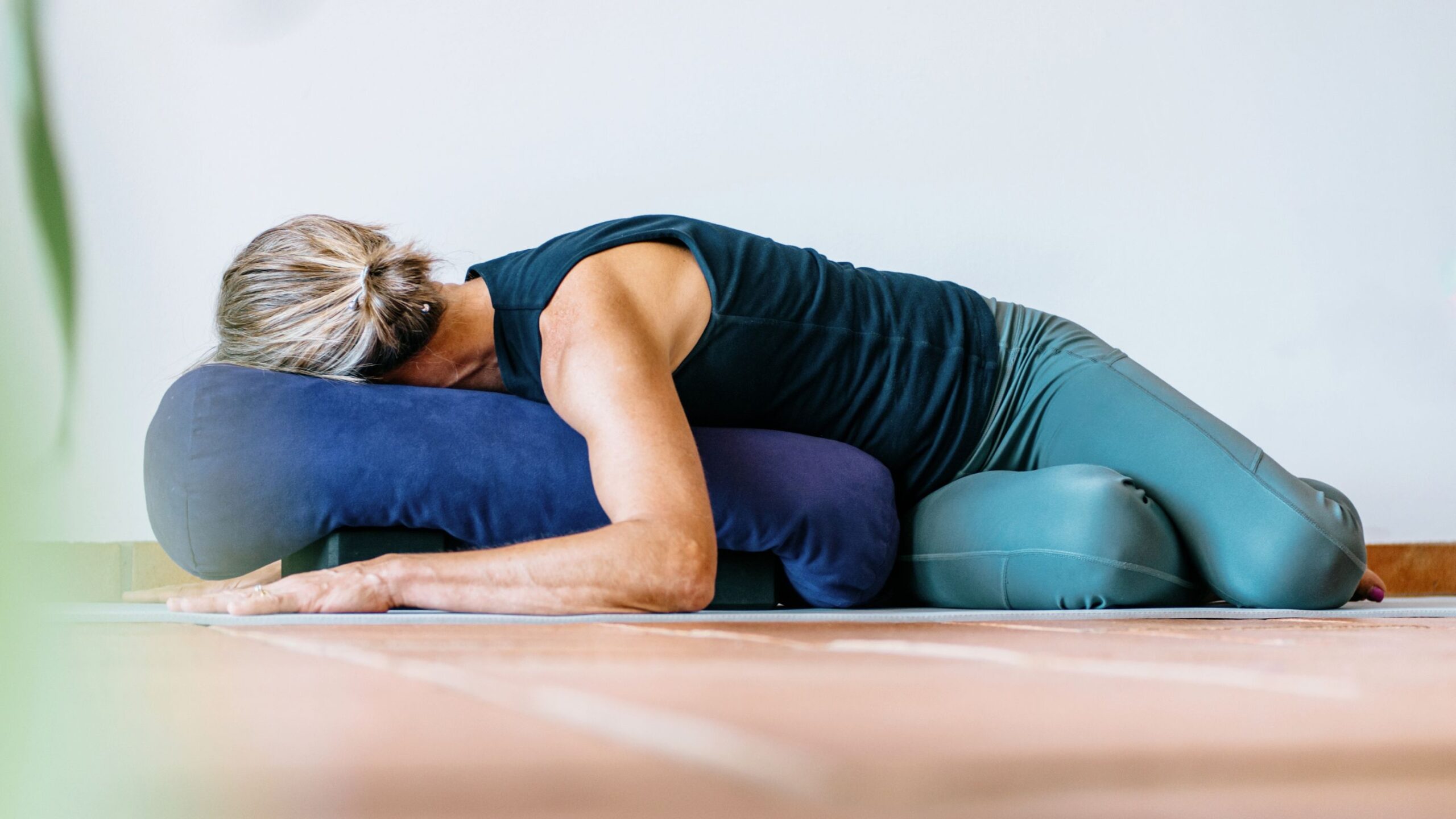
Table of Contents
There’s a particular kind of tiredness many people carry now that isn’t always solved by simply “going to bed earlier.” The body is exhausted, but the mind is still alert. Thoughts continue looping why muscles stay subtly braced. The nervous system hasn’t fully received the message that the day is over.
This is where restorative yoga can be incredibly supportive.
Unlike more active styles of practice, restorative yoga is less about stretching deeply and more about creating the conditions for the body to down-regulate. Props do most of the work: the body is held, supported, and cushioned so that effort can gradually dissolve into complete ease. Breathing slows naturally, muscular gripping softens, and the mind has fewer reasons to stay “on.”
And, the more props, the better!
Bolsters, blankets, eye pillows, straps, blocks, sandbags, cushions, and even the wall all become part of the practice. Rather than the mind and body coordinating to hold positions, the props hold the body, allowing it to feel safe and supported enough to release tension on its own.
This kind of practice is particularly lovely in the evening, especially during stressful periods, hormonal transitions, high Vata states, busy seasons, or anytime your sleep is feeling light or unsettled.
You can practise this sequence in your bedroom, beside your bed, or even directly on your bed itself.
Bedtime Restorative Yoga Practice
Aim to move slowly. Dim the lights. Put your phone away (in another room so it’s out of sight out of mind is a good idea). If you like, put some on some calming music, essential oils, or make yourself a herbal tea beforehand.
Hold each pose anywhere from 2–10 minutes depending on your time and energy availability.
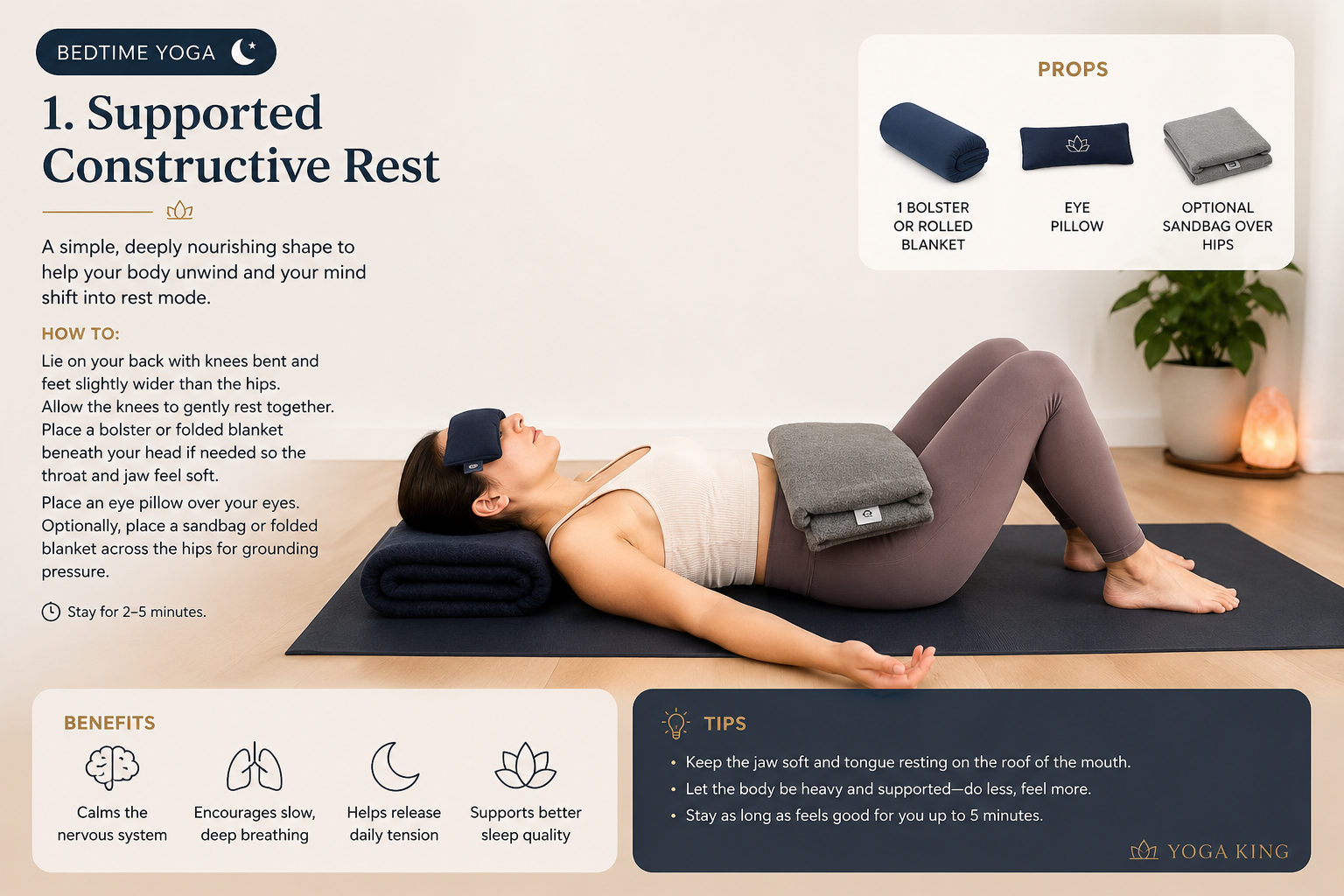
Supported Rest
Props:
- 1 bolster or rolled blanket
- 1 eye pillow
- Optional sandbag over hips
Lie on your back with knees bent and feet slightly wider than the hips. Allow the knees to gently rest together. Place a bolster or folded blanket beneath your head if needed so the throat and jaw feel soft.
An eye pillow can help reduce sensory stimulation and encourage the eyes and forehead to relax. If you enjoy grounding pressure, place a sandbag or folded blanket across the front of the hips.
This is a simple shape, but often one of the most effective for helping the nervous system transition out of “doing mode.”
Stay for 2–5 minutes.
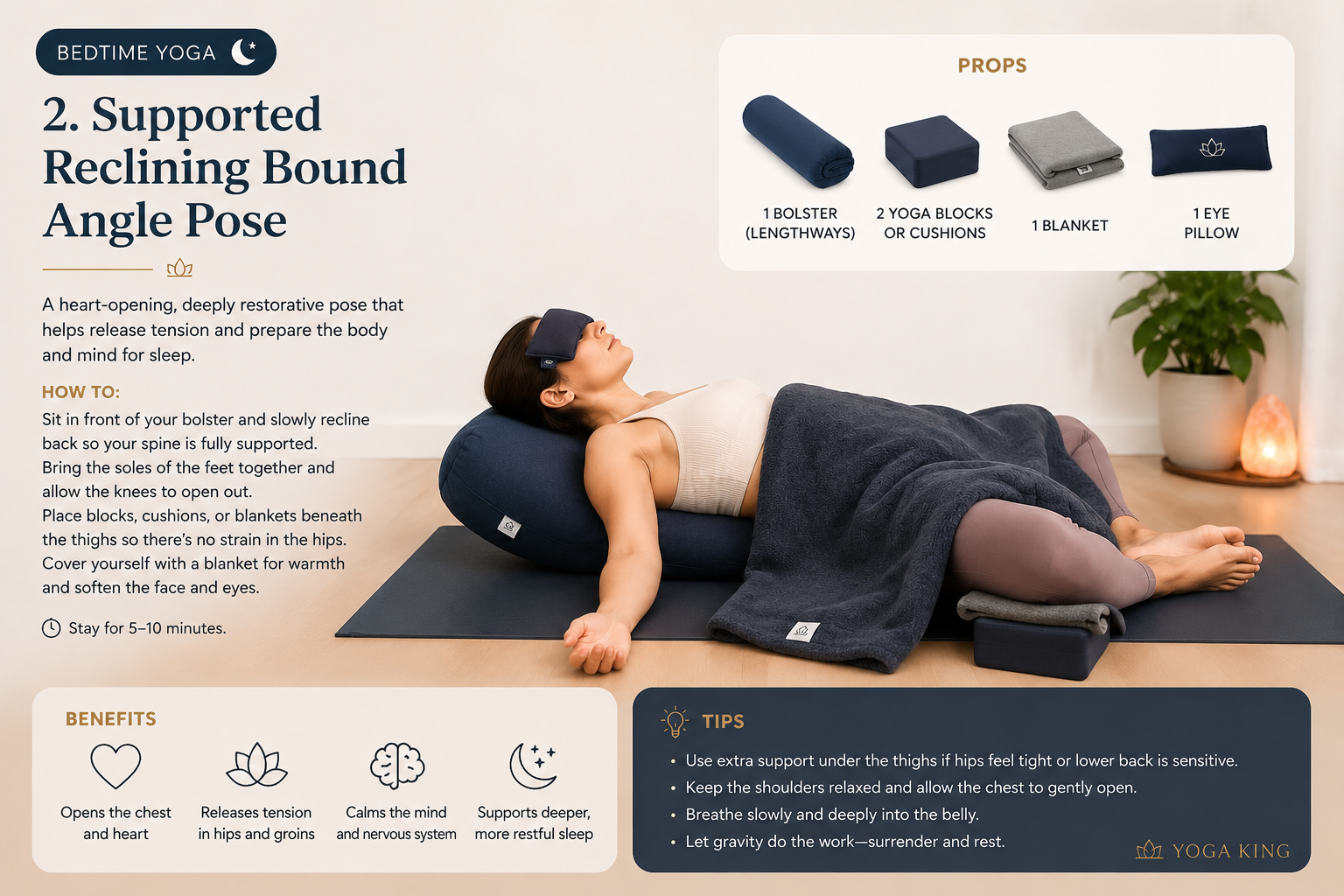
Supported Reclining Bound Angle Pose
Props:
- 1 bolster lengthways under spine
- 2 yoga blocks or cushions under thighs
- 1 blanket
- 1 eye pillow
Sit in front of your bolster and slowly recline back so the spine is fully supported. Bring the soles of the feet together and allow the knees to open out, placing blocks, cushions, or blankets beneath the thighs so there’s no strain in the hips.
Cover yourself with a blanket for warmth.
This pose creates a gentle opening through the chest and front body while still feeling deeply restful and contained.
If the lower back feels sensitive, elevate the knees higher with extra support.
Stay for 5–10 minutes.
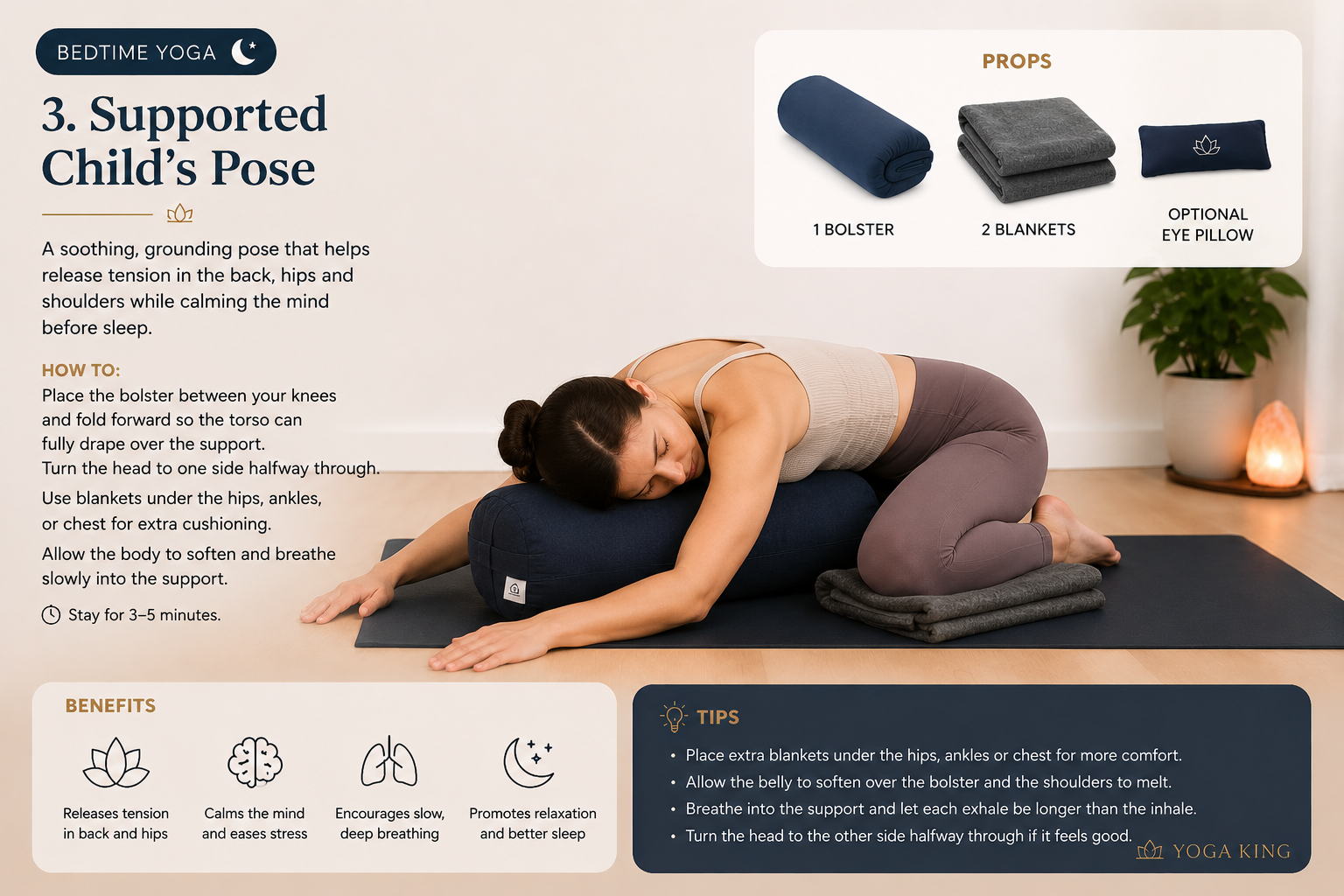
Supported Child’s Pose
Props:
- 1 bolster
- 2 blankets
- Optional eye pillow
Place the bolster between your knees and fold forward so the torso can fully drape over the support. Turn the head to one side halfway through.
You can stack blankets beneath the hips, ankles, or chest anywhere the body needs additional cushioning.
The compression of the bolster against the belly often creates a deeply soothing, grounded effect — almost like the nervous system finally exhales.
Stay for 3–5 minutes.
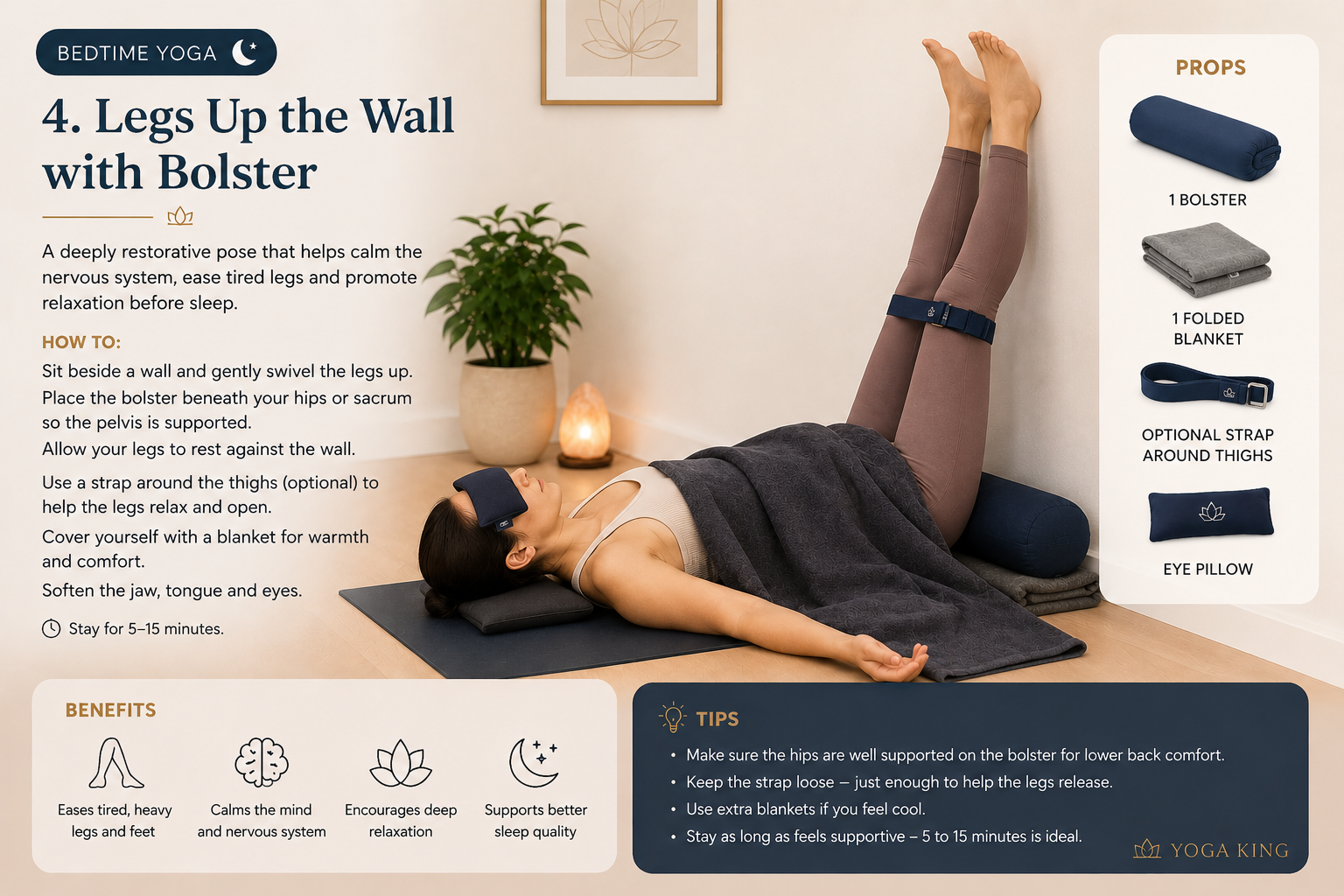
Legs Up the Wall with Bolster
Props:
- 1 bolster
- 1 folded blanket
- Optional yoga strap around thighs
- Eye pillow
Sit beside a wall and gently swivel the legs upward. Position the bolster beneath the hips or sacrum and allow the legs to rest against the wall.
A loose yoga strap around the thighs can reduce muscular effort even further, allowing the legs to completely release.
Cover the body with a blanket and soften the jaw, tongue, and eyes.
This pose can feel especially supportive after long days standing, travelling, teaching, parenting, or simply carrying mental fatigue.
Stay for 5–15 minutes.
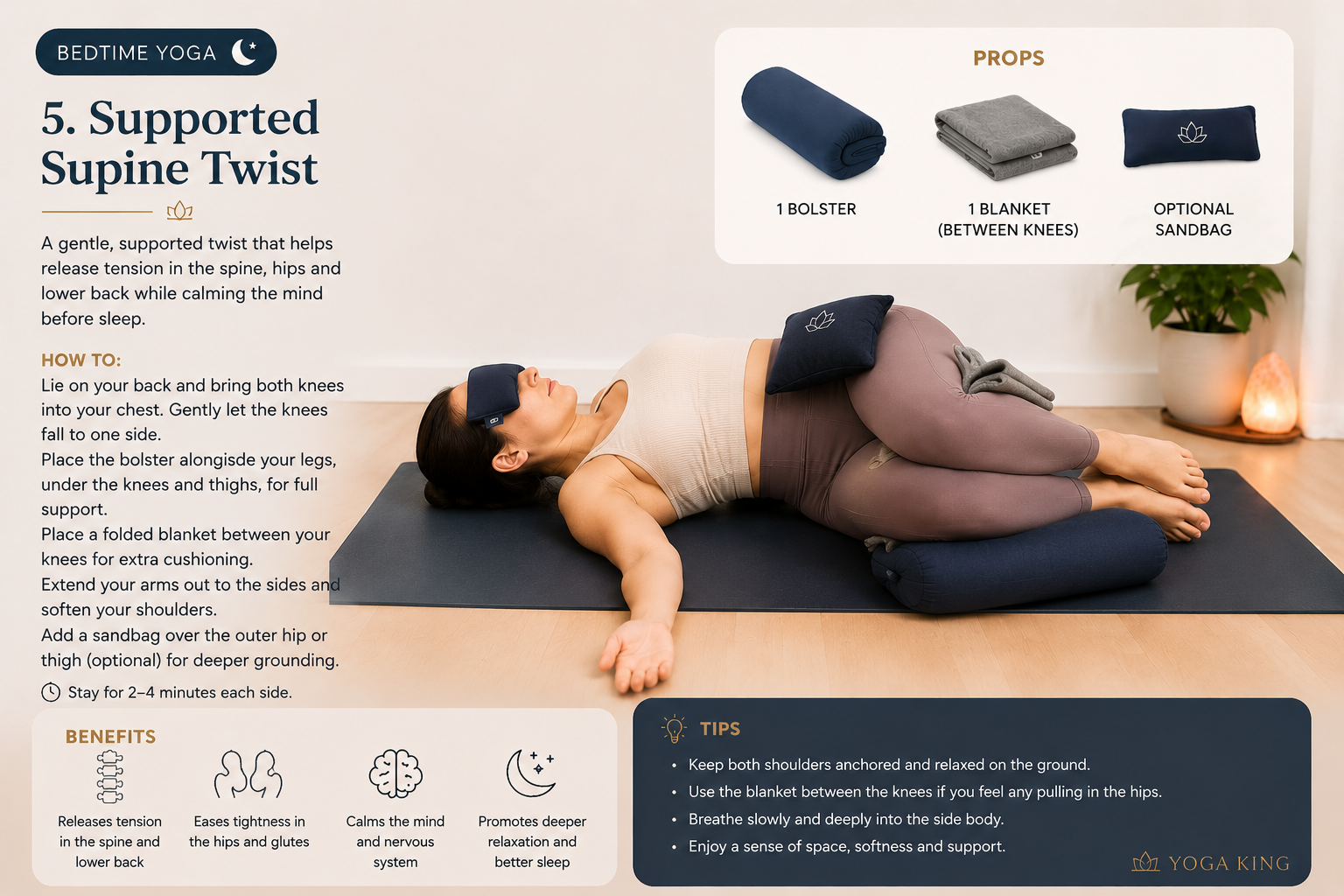
Supported Supine Twist
Props:
Bring both knees to one side and place the bolster beneath them so there’s no pulling through the lower back. A folded blanket between the knees can create more comfort through the hips and sacrum.
Extend the arms softly and allow the chest and abdomen to relax around the breath.
If you enjoy deeper grounding, place a light sandbag across the outer hip or thigh.
Stay for 2–4 minutes each side.
Fully Supported Savasana
Props:
- Bolster beneath knees
- Blanket under head
- Blanket over body
- Eye pillow
- Optional weighted sandbag on pelvis or hands
This is less about “holding a pose” and more about allowing yourself to be completely supported.
Take time arranging the props properly. Comfort matters.
Many people are surprised to realise how difficult true rest initially feels. The body may twitch. Thoughts may speed up before they slow down. That’s okay. Rest is also a practice.
Allow the floor, the props, and the breath to hold you.
Stay for at least 10 minutes if possible.
Why Restorative Yoga Helps Sleep
Restorative practice appears simple externally, but physiologically it can have a profound effect. Long-held supported positions may help:
- reduce sympathetic nervous system activation
- encourage slower breathing patterns
- reduce muscular guarding and tension
- support circulation and lymphatic flow
- improve body awareness and interoception
- create conditions that feel safer and calmer internally
From an Ayurvedic perspective, evening restlessness, light sleep, overthinking, tension, dryness, and mental overstimulation are often associated with aggravated Vata dosha. Warmth, heaviness, softness, rhythm, grounding, and stillness all help counterbalance these qualities, which is exactly why prop-supported restorative yoga can feel so regulating at night.
The goal isn’t to “force” sleep. Usually, the body sleeps much more easily once it no longer feels like it needs to stay alert. The more you practice ‘letting go’ in restorative poses, the easier it is to let go into sleep at night.
Optional Additions for a Full Evening Ritual
You could pair this practice with:
- warm magnesium bath or shower
- gentle pranayama
- Sound healing or mantra meditation
- calming herbal tea
- Abhyanga (Ayurvedic oil self-massage)
- low lighting and reduced screen exposure
- calming soundscapes or ambient music
Sleep hygiene matters, but feeling safe, grounded, warm, and supported matters too.
And sometimes a pile of bolsters and blankets is the simplest way to help the body soften into sleep.
Support your practice with the right tools.
Explore Yoga King’s range of mats, blankets, bolsters, belts and props designed to help you practise comfortably and safely, whether you’re building strength, restoring balance, or simply taking time to breathe.
🛒 Explore the full range on our website: www.yoga-king.com
✨ Eco-conscious, carbon-neutral products
✨ Authentic, high-quality yoga props
✨ Trusted service from a family-owned business
Follow us for inspiration, practice tips, and product highlights — all designed to support your journey on (and off) the mat.
📦 Shipping Australia-wide
🌱 Every $200 spent = 1 tree planted
🧘 Props you can trust since 2002