We take around 22,000 breaths every day and yet we usually just notice a handful of those breaths. But our breath can make a huge difference to our health – physically, mentally and energetically.
Yoga understands the value of the breath and pranayama (prana means vital life force and yama means to gain control). There are specific pranayama techniques and there is also breath awareness – which involves observing the natural rhythm of the breath.
The pranayama practices involve guiding the respiration beyond its normal limits – which includes stretching it (gradually inviting longer inhalations and exhalations), speeding it up (with energising pranayama) and slowing it down (tranquilising pranayama) to help strengthen lung capacity, boost energy and metabolism and create a sense of calm.
Another element of pranayama is breath retention, (known as kumbhaka) this is the pause at the end of the inhalation (known as Antara Kumbhaka) and exhalation (Bahir Kumbhaka). It is usually practiced in more advanced sessions as it is important to gradually build up to this breath work, to avoid straining the breath or risking hyperventilation.
In yoga sessions there is also a focus on breathing in and out during certain parts of the movements – generally you breathe in when you expand the body (think opening/raising arms) and breathe out when the body naturally contracts (think lowering/releasing arms). This also helps cultivate mindfulness and assists body awareness.
By noticing our breath and gently inviting a longer, slower and smoother exhalations we can begin to slow our heart and respiration rate, relax our muscles and even reduce blood pressure LINK to HARVARD article. This helps to create a shift physically and mentally to a state of relaxation and calm. Which is why when you got upset as a kid, your parents really did know what they were talking about when they told you to take a few deep breaths!
Three keys for breathing
#1: Breathe in and out through your nose. We have fine nasal hairs in our nose (plus turbinates and other cool stuff inside ours noses!) which help to filter toxins and germs from the air. Nasal breathing is also important for the facial muscles and bones to develop correctly to help warm and moisturise the air we breathe.
#2 Be aware of your posture – sit and stand tall with the shoulders and jaw relaxed, so you can take full and deep breaths more easily.
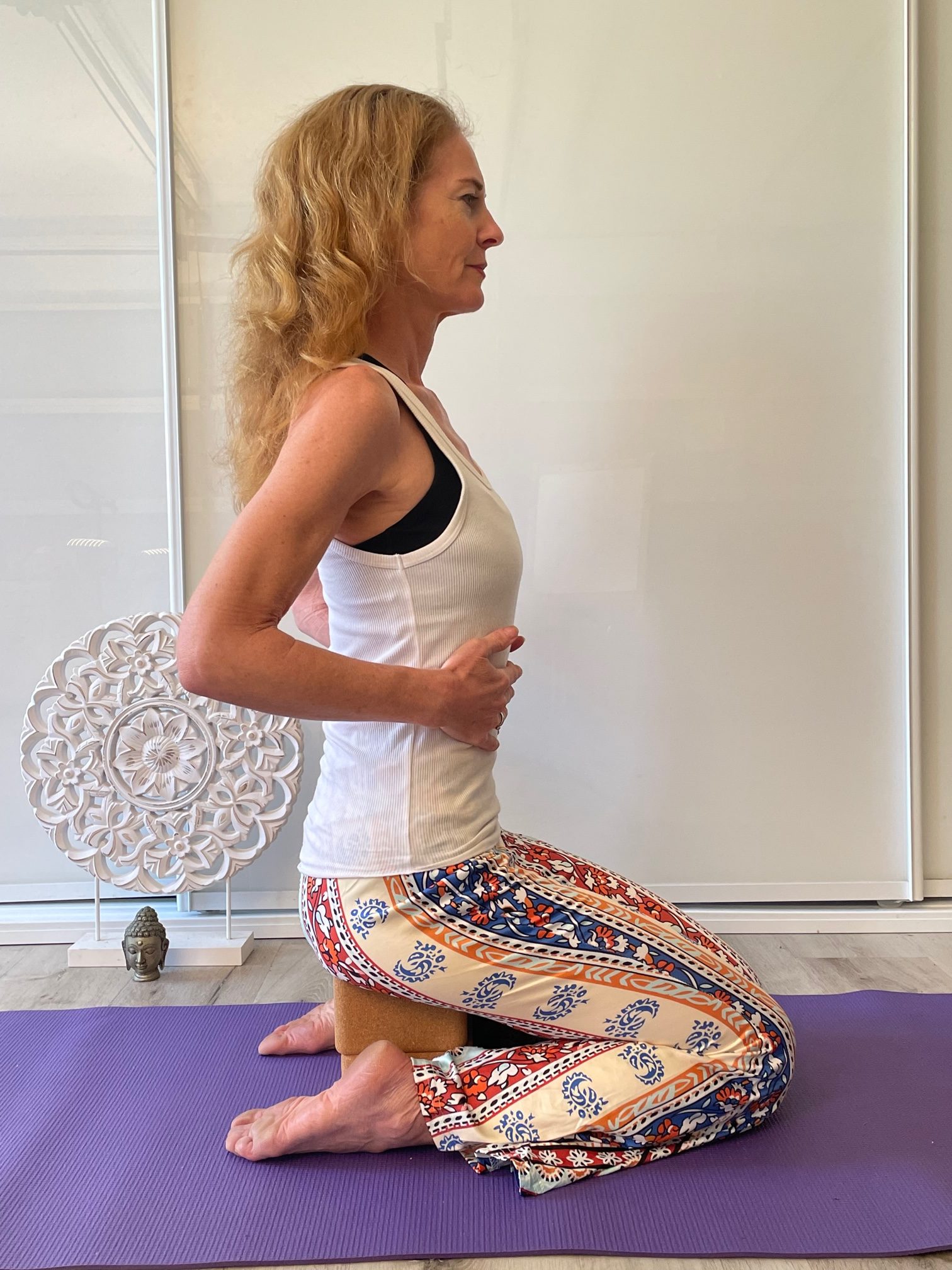
#3 Breathe down to the diaphragm. You may wish to take your hands and rest the just above the navel with the middle fingers lightly touching – as you breathe in you may notice the fingers coming apart slightly and as you breathe out the fingers some together. As you do this you start to tune into the natural rhythm of your breath – flowing in all the way to the diaphragm and then flowing all the way you – releasing the entire breath. As your diaphragm moves this creates a massaging effect on the internal organs.
A breath to energise – kapalabhati breathing (skull shining breath)
If you are new to this practice just start with 2-3 rounds of about 10 breaths. And stop immediately if you feel dizzy or light-headed.
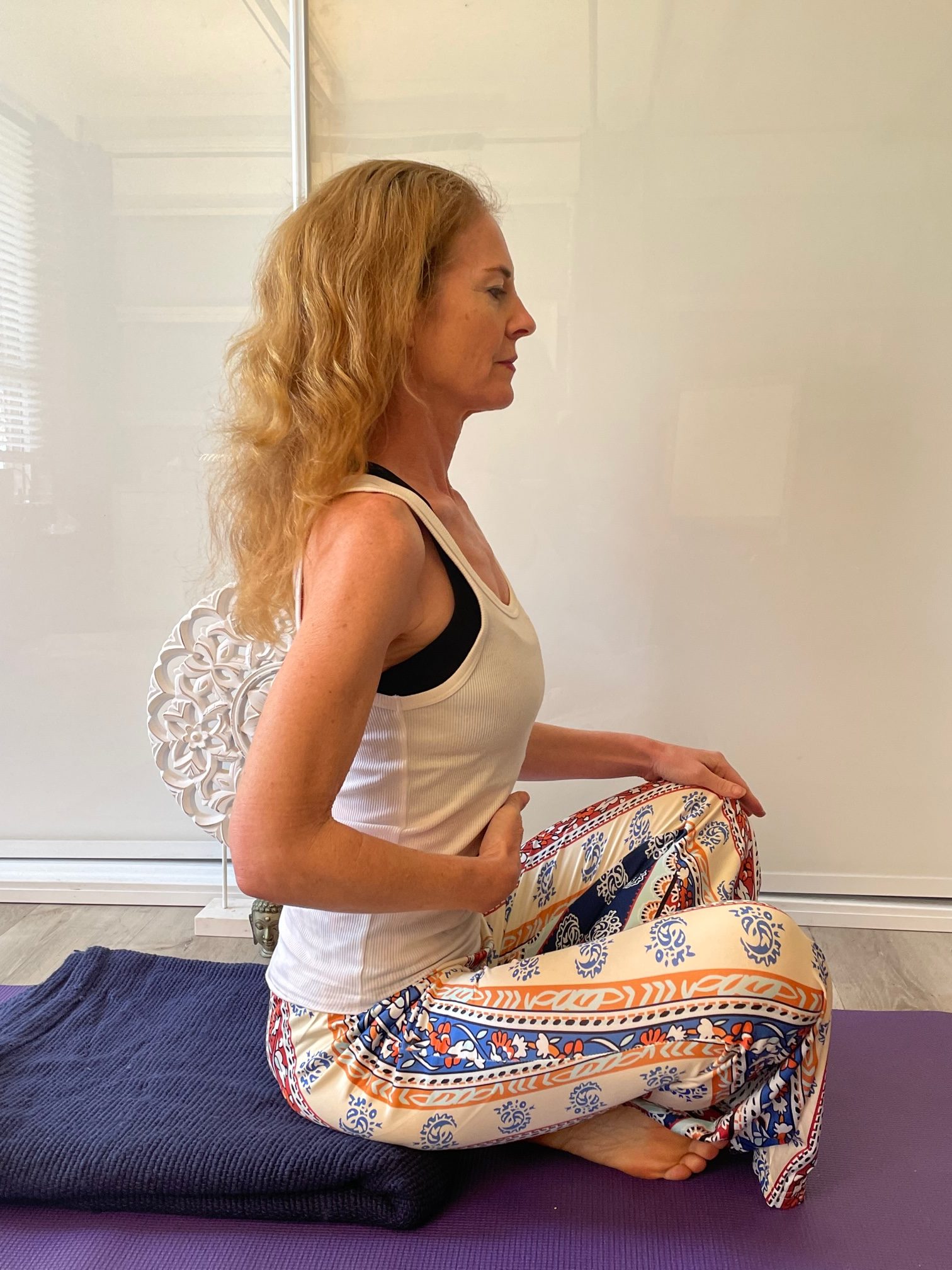
Sit comfortably (on the edge of a blanket or astride a bolster), with the spine tall and one hand on the lower belly. Take a deep breath in and then a fast, sharp and forceful breath out through the nose. As you exhale draw the navel back towards the spine.
When the belly relaxes the air will flow naturally back into the lungs.
Continue for around 10 more exhalations.
When you have finished take a few deep breaths in and out – noticing how the practice has made you feel.
This is called Shining Skull as it is said to be beneficial for the brain and is invigorating and revitalising.
A breath to balance – nadi shodhana (alternate nostril breath)
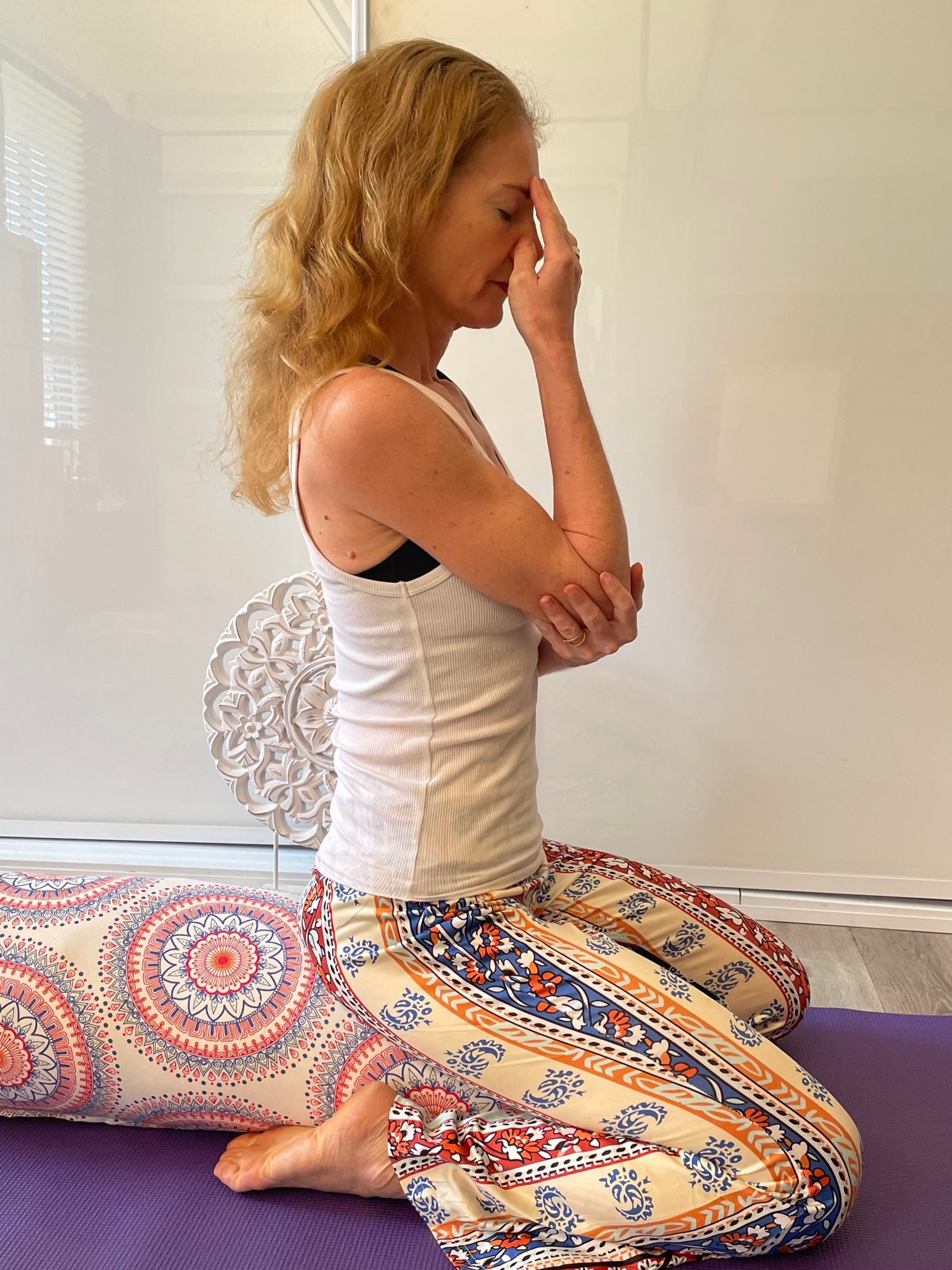
Sit comfortably, you may wish to sit on the edge of a cushion ,with your spine tall and shoulders relaxed.
Place your right index and middle fingers gently at the eyebrow centre, with the right thumb above the right nostril and the ring finger above the left nostril.
These fingers will control the flow of the breath in and out through each nostril.
Support the right elbow with the left hand and then close the right nostril with the thumb and breathe in through the left nostril for a count of 4.
Then use the ring finger to close the left nostril and release the thumb – breathing out through the right nostril for a count of 4.
Do 4 -6 more rounds.
This pranayama helps to balance the left (yin) and right (yang) energy channels, helping you to feel centered and calm.
A breath to relax – bhramari (buzzing bee breath)
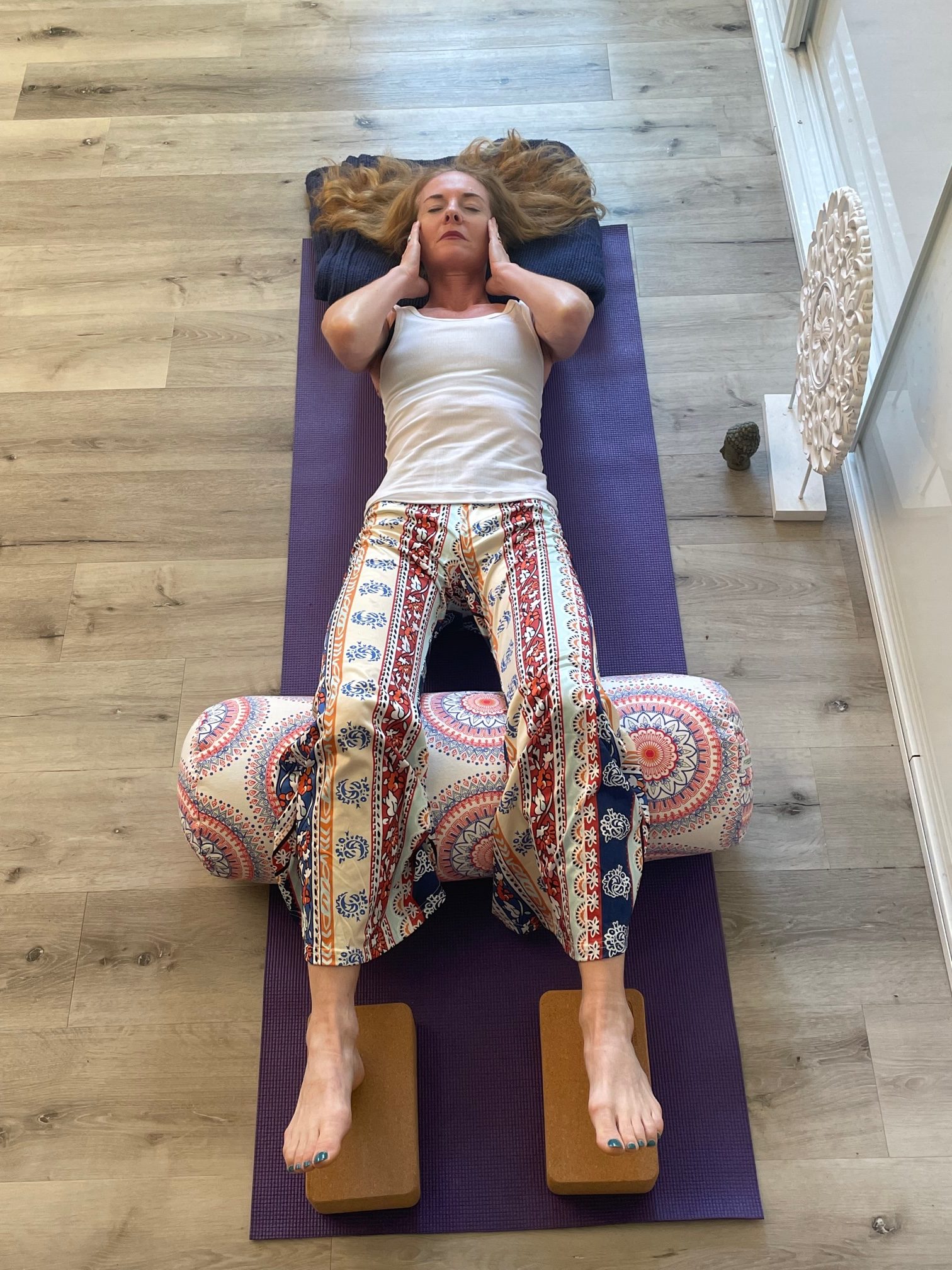
This is a fabulous breathing practice to help quieten a busy mind and release any mental tension. You can do this sitting or lying in Savasana with a bolster under the knees and a blanket over you.
Place the index fingers on the tragus (the small flap in front of the ears) and close the eyes – the aim is to withdraw from the external world, so you can turn your focus inward.
Take a breath in through the nose and with the lips lightly together and teeth apart begin to hum. In a long, slow exhalation.
Then take another breath in through the nose and repeat – continue for as many rounds as you would like.
When finished, spend a few minutes noticing sensations from the practice as your breath returns to its natural rhythm.
Breathing for mental health
Our breath is key to easing stress and agitated by helping to induce the Relaxation Response (a term coined by Dr Herbert Benson). The Relaxation Response assists the body to come into the parasympathetic nervous system which encourages healing and rest in the mind and body.