
Anxiety is something we have all experienced at some point. Sometimes it’s subtle, sometimes intense. It can show up as obvious symptoms like a racing mind, restless sleep, muscular tension, shallow breathing, or it can creep in as a sense of ambiguous internal pressure and pending doom.
Table of Contents
In yoga, we understand that the experiences of anxiety aren’t just mental. It’s a mind-body experience – the breath changes, heart rate shifts, muscles tense, and digestion changes. The nervous system moves into a heightened state of alert.
Ancient yogic texts describe one of the aims of yoga practice as ‘stilling the fluctuations of the mind.’ What’s often overlooked is how practical that process is. Patanjali’s eight limbs begin with behaviour, posture, and breath before moving toward meditation. The pathway moves from outer to inner; from body to breath to awareness.
When we work with our body and breath, the mind follows.
Modern research now supports what yoga has taught for thousands of years. Slow diaphragmatic breathing improves heart rate variability, which is a key marker of emotional regulation. Gentle yoga practices have been shown to reduce symptoms of generalized anxiety and improve resilience over time. Long-term practitioners demonstrate measurable changes in brain regions associated with stress response.
Although, yoga practices don’t strive to eliminate anxiety entirely, rather, they offer tools to help us cultivate steadiness within it.
A Practical Framework
While the eight limbs of yoga offer a complete system, four are particularly relevant when supporting anxiety.
Environment & Daily Rhythm (Yama and Niyama)
Before stepping onto the mat, consider the environment. Soft lighting. Reduced noise. Warmth. A clean, orderly space. Even these small adjustments signal safety to the nervous system. Regular sleep timing, balanced meals, and time outdoors contribute to internal steadiness more than we sometimes realise.
Asana (Posture)
Not every pose has the same energetic effect. For nervous system regulation, slower transitions, supported positions, and grounded poses are most effective when it comes to anxiety. Try to prioritise:
- Gentle spinal mobility
- Supported forward folds
- Mild, supported backbends
- Hip flexor release
- Head supported or level with the heart
Common areas of tension during stress include the jaw, shoulders, diaphragm, and hip flexors. When these areas soften, breathing naturally becomes smoother and the mind and body are able to relax.
Pranayama (Breath Regulation)
Breathing is one of the most direct and accessible tools we have. Lengthening the exhale encourages parasympathetic activation. A simple 1:2 ratio, for example inhaling for 4 and exhaling for 6 or 8, is often enough to affect change in our internal environment.
Pratyahara (Withdrawing the Senses)
Closing the eyes. Supporting the forehead. Reducing visual stimulation. Adding gentle warmth or weight through blankets. These are subtle but powerful signals of reassurance to our nervous system. When sensory input if reduced or softened, internal awareness becomes steadier, relieving some of the intensity that anxiety breeds.
A Gentle Yoga Sequence for Anxiety
This sequence is accessible for home practice and adaptable for teachers. Suggested duration for each pose is 5–10 slow breaths, or whatever feels comfortable.
1. Supported Child’s Pose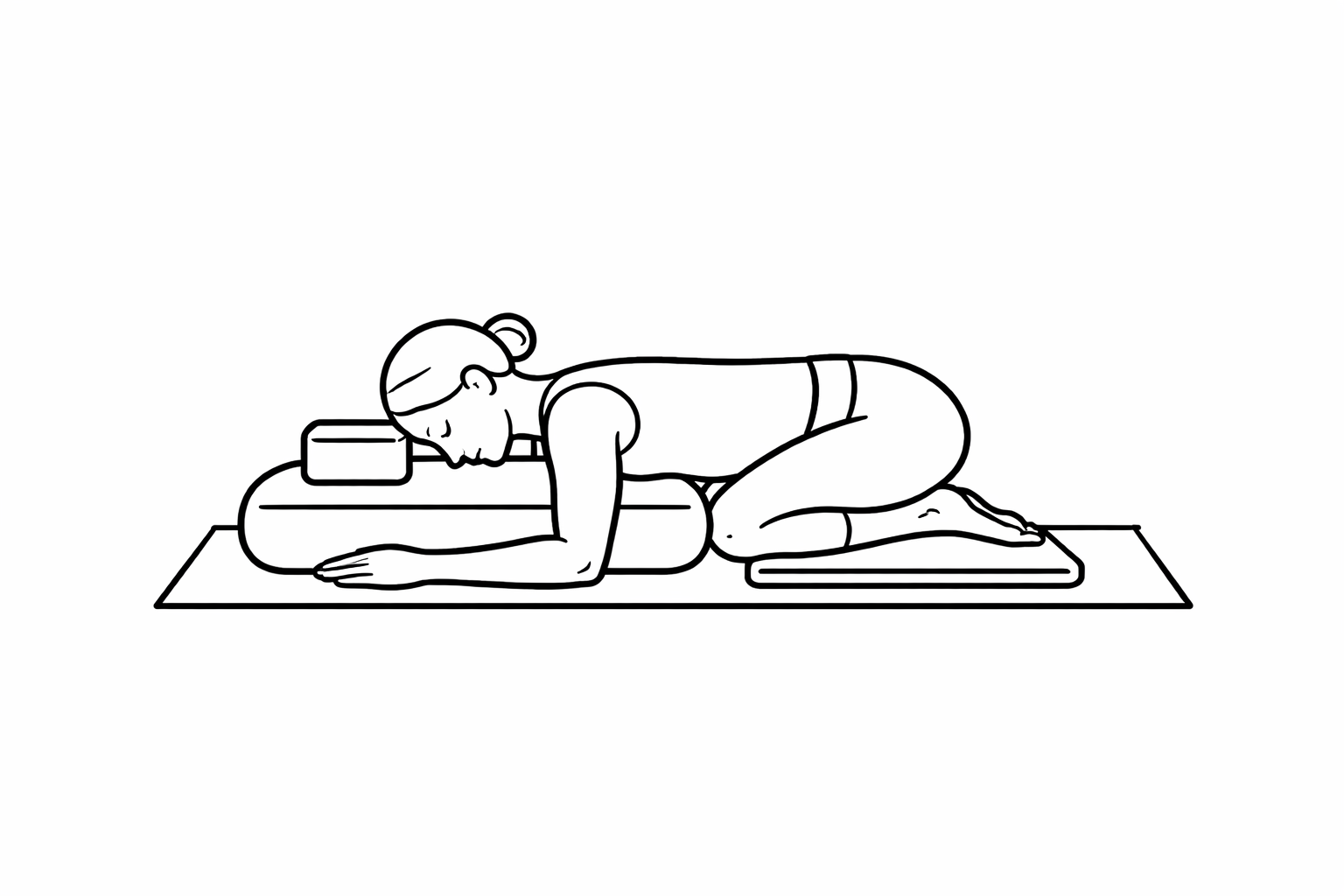 Knees wide, big toes together. Rest your forehead on a block or bolster.
Why it supports regulation: Forehead support and hip flexion encourage a settling response. The shape is grounding and contained.
Props:
Breath focus: Slow nasal breathing. Let the exhale lengthen naturally.
2. Cat–Cow (Slow + Breath-Led)
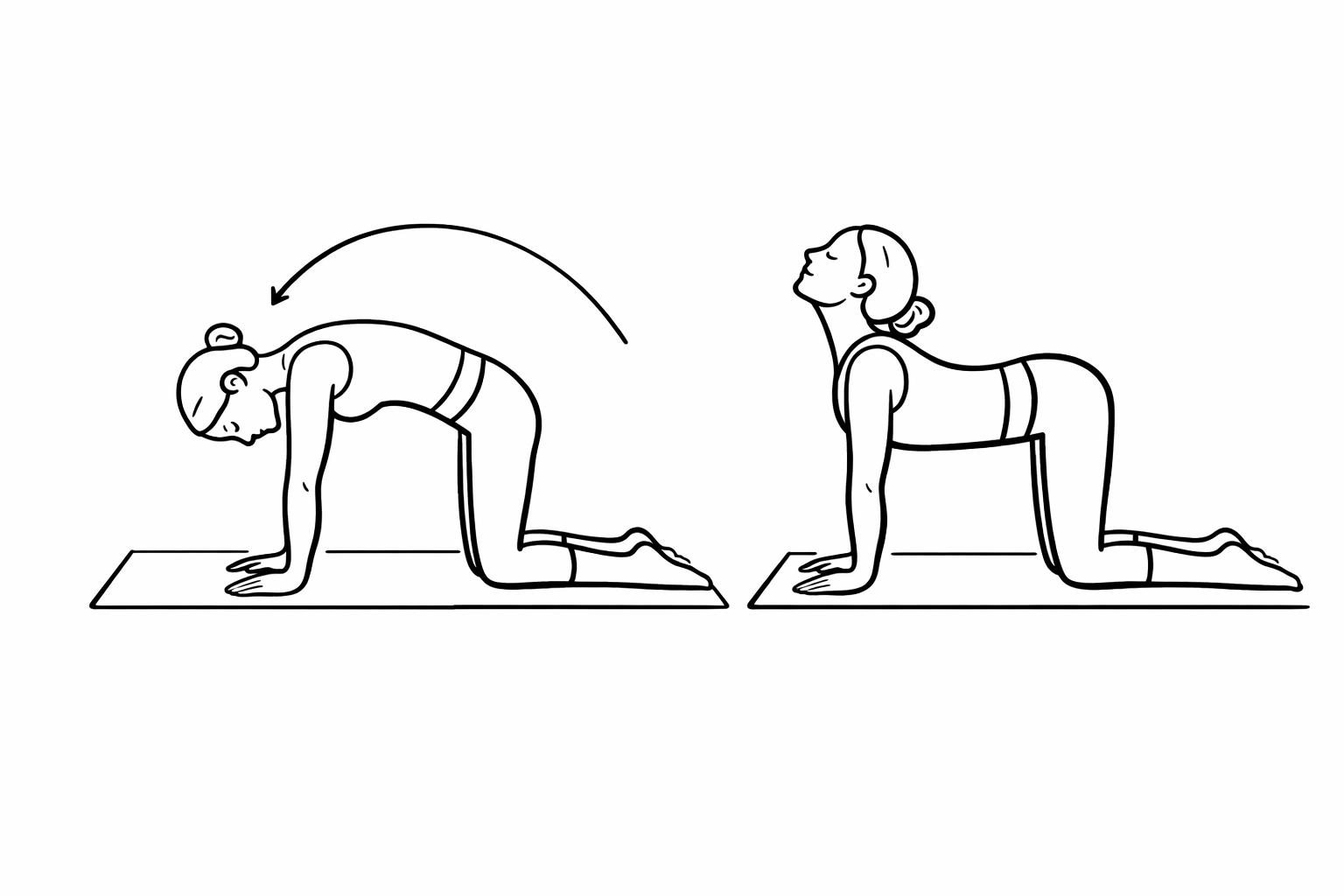 Inhale into Cow; Exhale into Cat, slightly longer.
Keep the pace steady and unhurried.
Move slowly between spinal flexion and extension.
Why it supports regulation: Gentle spinal movement increases circulation and coordinates breath with movement, building internal awareness.
3. Supported Puppy Pose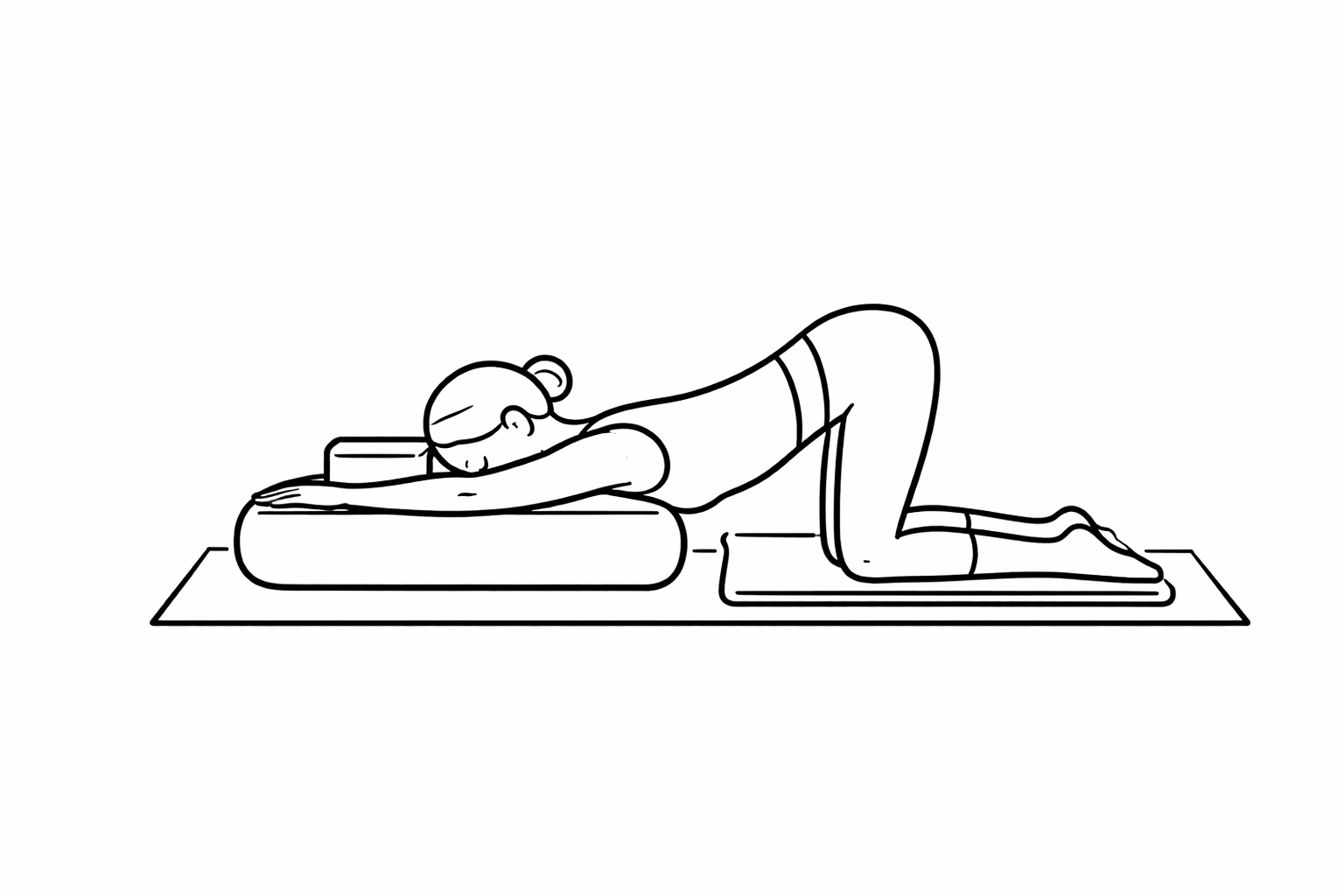 Hips stacked over knees. Forehead or chest supported on a block.
Maintain smooth, even breathing.
Why it supports regulation: Creates space across the chest without intensity. Encourages release through shoulders.
Props:
4. Low Lunge (Gentle Upright Variation)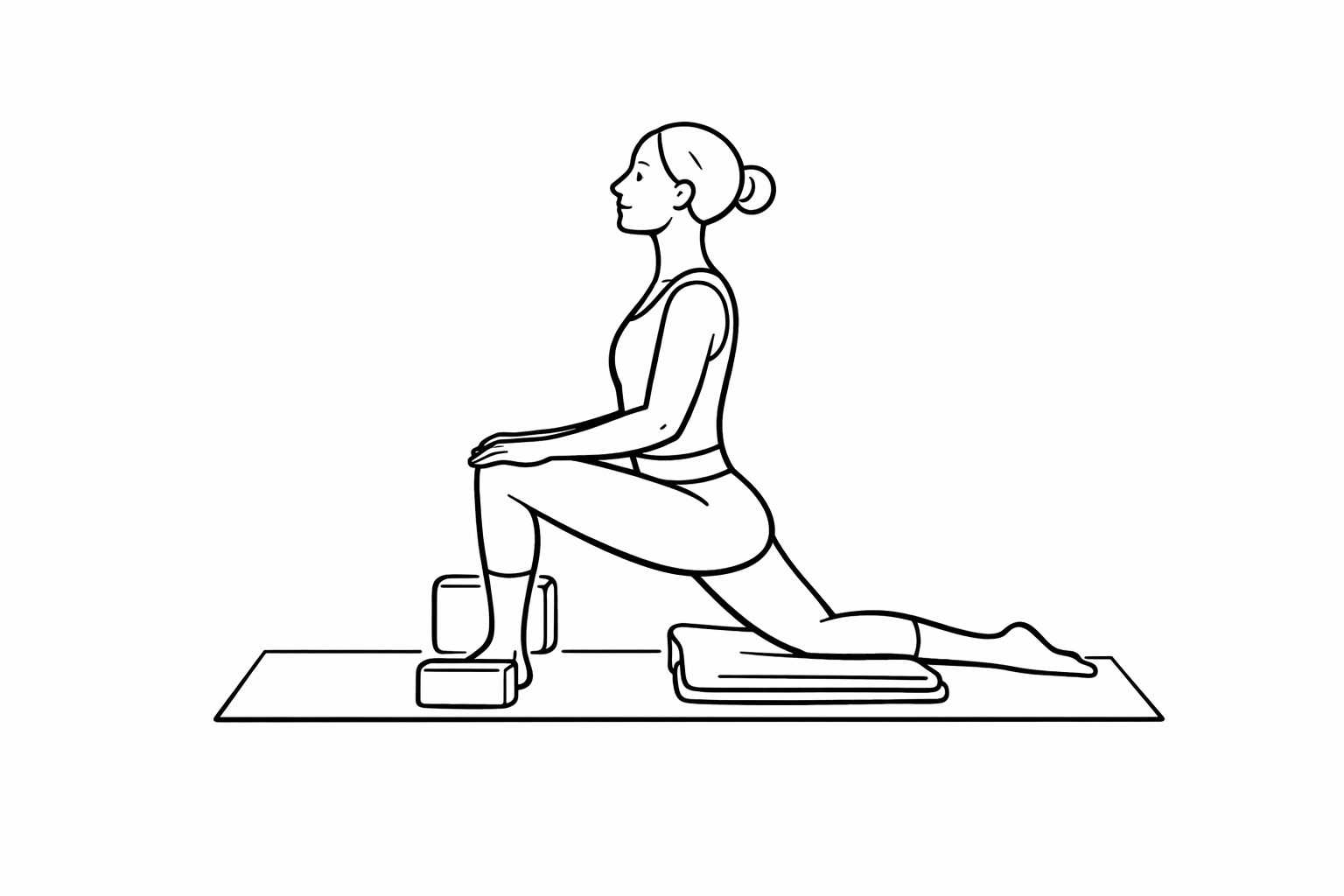 Back knee down, hands resting on blocks.
Lift through the chest gently, keeping the lower back comfortable.
Why it supports regulation: The psoas muscle is responsive to stress. A supported, upright lunge allows gradual lengthening without strain.
Props:
5. Supported Bridge Pose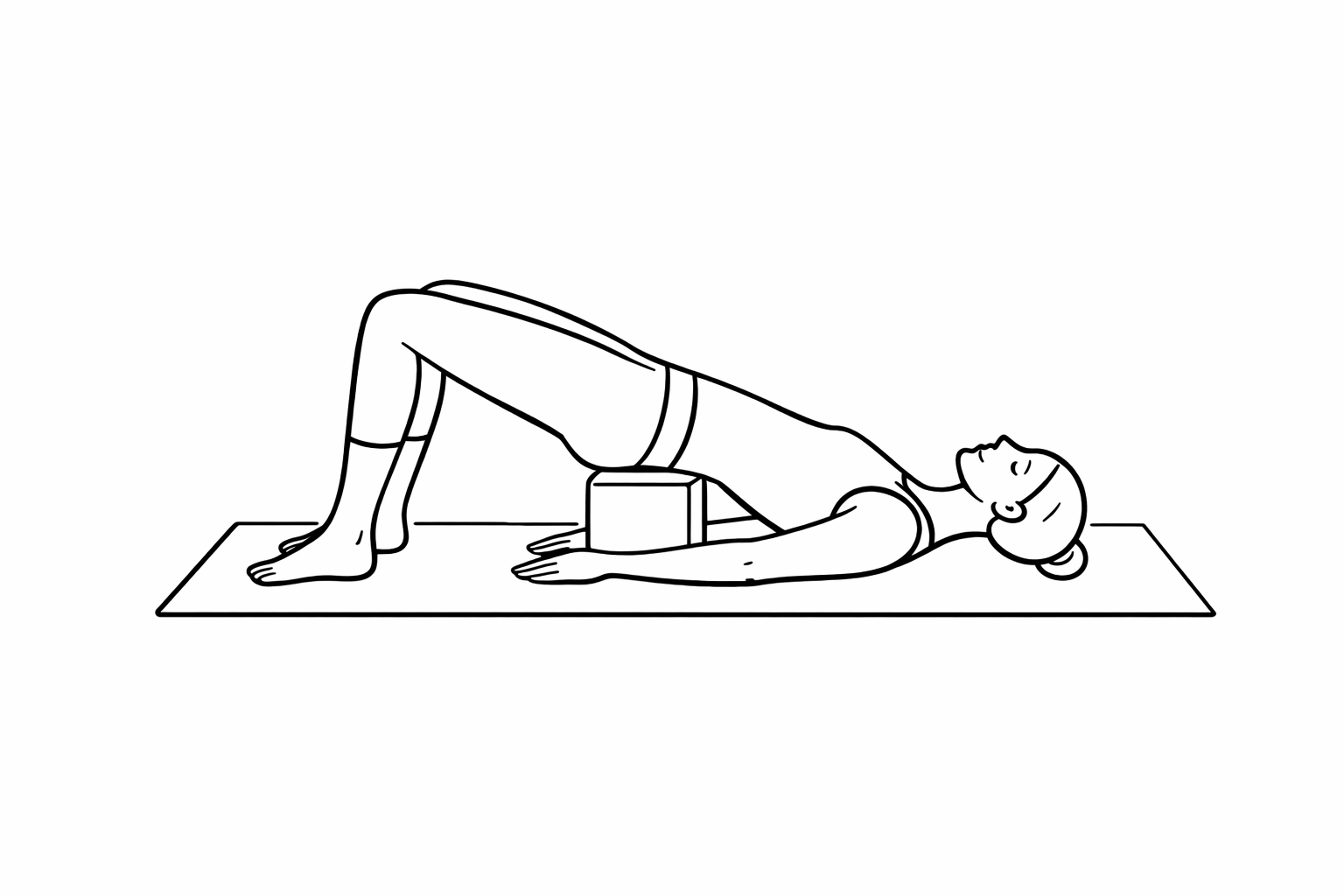 Place a block under the sacrum at a low or medium height. Allow the pelvis to rest fully. Keep the glutes soft and breath steady.
Why it supports regulation: A mild supported inversion encourages circulation while remaining restful.
Props:
- Yoga block/s
6. Supported Reclining Twist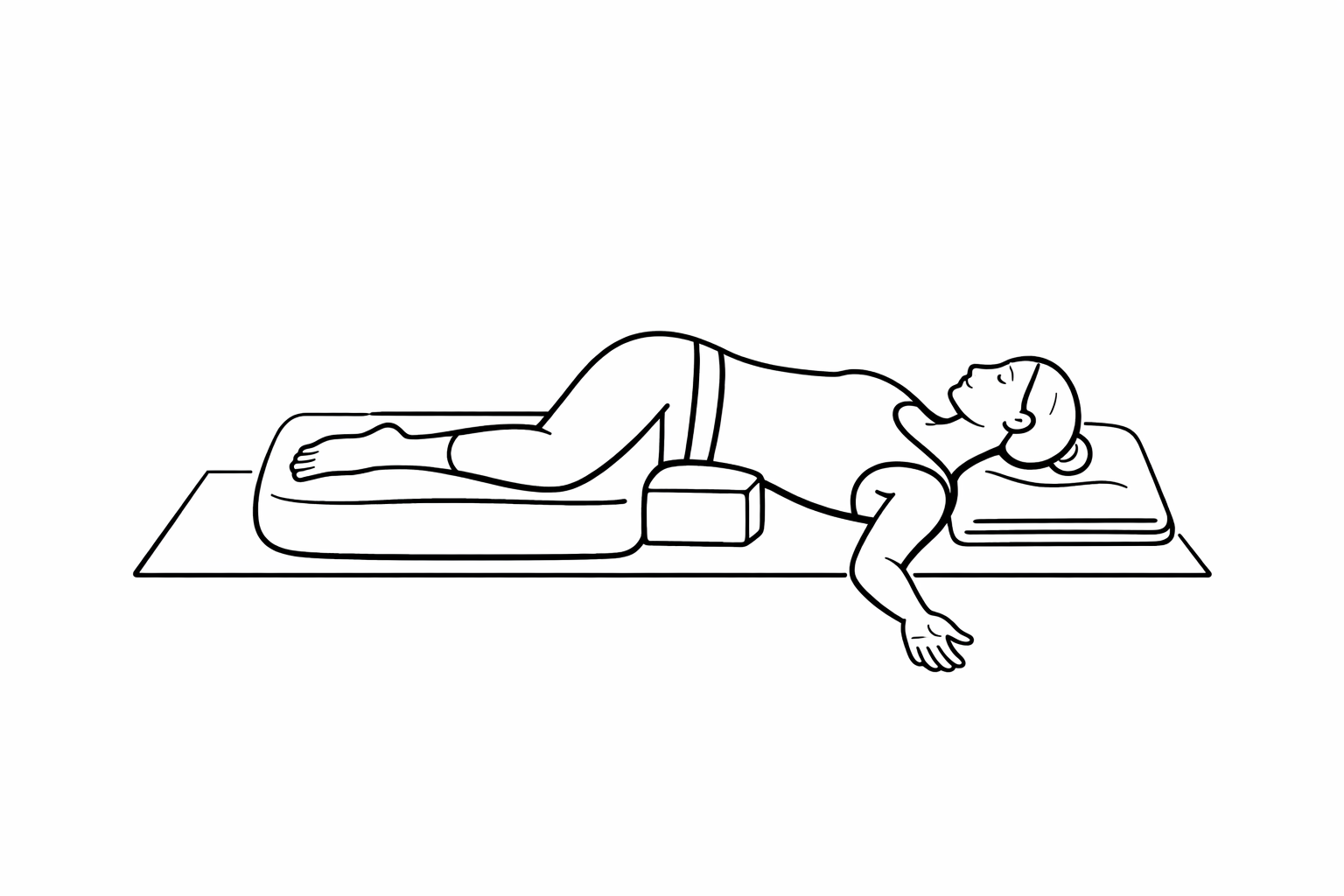 Allow knees to rest on a bolster. Stay for several slow breaths on each side.
Why it supports regulation: Supported twists influence digestion and encourage deep diaphragmatic breathing.
Props:
7. Supported Savasana (8–10 Minutes Minimum)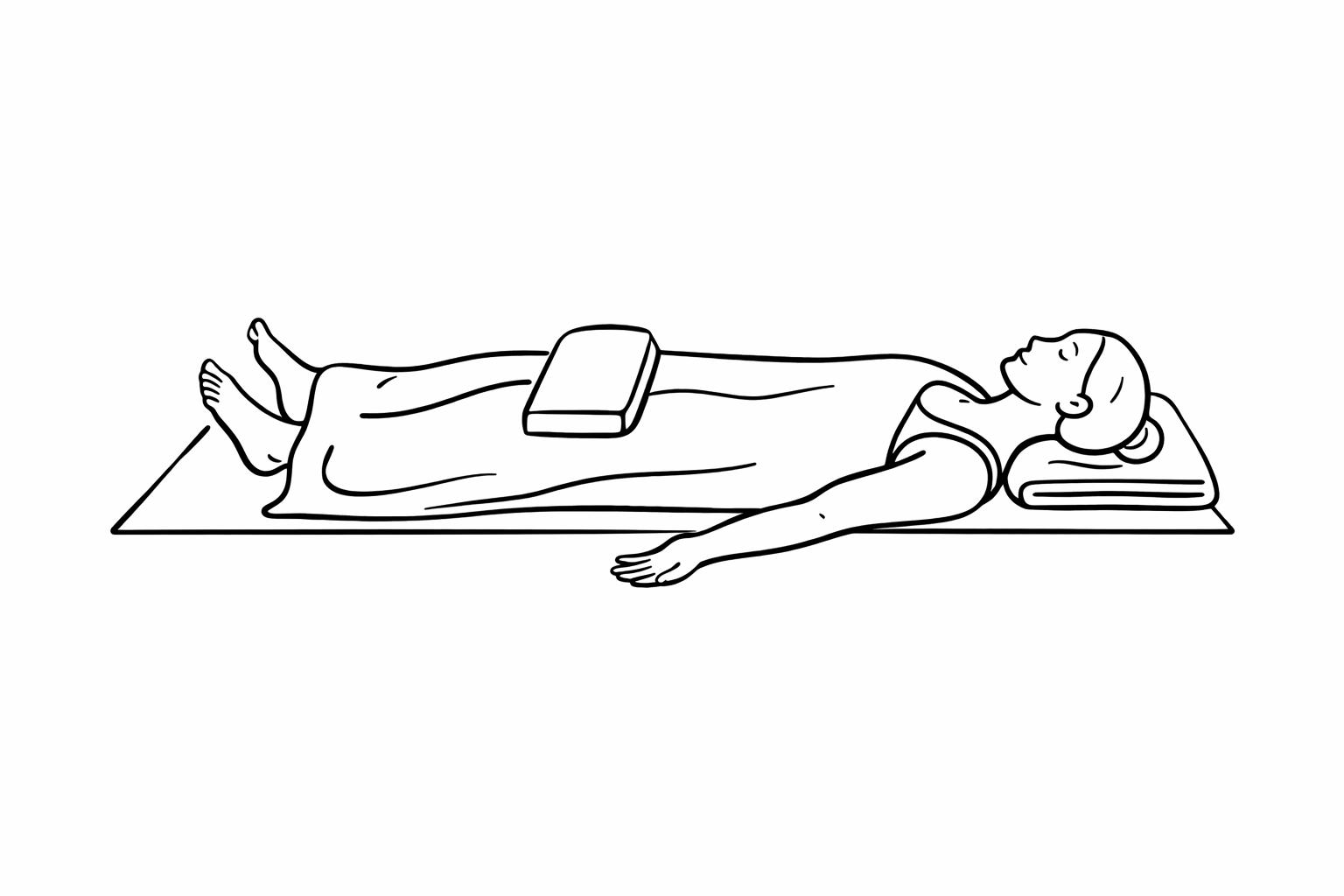 Bolster under knees. Blanket over the body. Optional gentle weight over thighs.
Remain longer than you think you need.
Why it supports regulation: Warmth, stillness, and gentle pressure communicate safety. Extended rest allows integration.
For Teachers: Structuring a Nervous-System-Friendly Class
When designing a class for anxiety support, consider the following guidelines:
Begin on the ground.
Move gradually.
Limit transitions.
Keep cues simple and spacious.
Avoid overstimulation.
Build calm through repetition and steadiness.
Suggested flow:
- Grounded arrival with breath
- Gentle spinal movement
- Low-load hip opening
- Supported back body work
- Extended rest
The Role of Props in Emotional Regulation
- Support allows the nervous system to release vigilance.
- Blocks reduce effort.
- Bolsters encourage longer holds.
- Blankets provide warmth and comfort.
- Alignment mats create visual clarity and orientation.
- Comfort is therapeutic.
- When the body feels supported, the breath, nervous system, and mind soften.
Breath as Anchor
If there is one element to prioritise, it is the breath. Whenever attention drifts, gently return to inhalation and exhalation. Think of it as an anchor, something steady beneath changing thoughts and mental fluctuations.
Over time, the space between thoughts widens, reactivity decreases and clarity and responsiveness increases. This is how yoga supports anxiety > gradually, patiently, and without force, restoring balance from the inside out.
A Sustainable Practice
Anxiety may still arise, that’s part of the human experience.
Yoga offers a way to respond skilfully through breath, posture, environment, and attention.
It doesn’t require extreme flexibility or complicated techniques. It asks only for consistency.
With repeated practice, the body learns how to shift more efficiently from activation into calm, and overtime, the nervous system becomes familiar and grounded in steadiness. And that steadiness becomes available not only on the mat, but throughout daily life.
🌱 Support your practice with props to regulate your nervous system and calm your anxiety – shop for your setup at Yoga King Products → head to Yoga-King.com
📦 Shipping Australia-wide
🌱 Every $200 spent = 1 tree planted
🧘 Props you can trust since 2002