
By the time March arrives, the year has found its rhythm. The school bags are packed again. Calendars are filling. Workshops are booked in. Studio timetables are running steadily. If you’re a teacher or studio owner, you’re likely holding space for everyone else > greeting students, answering emails, planning events, keeping things moving behind the scenes.
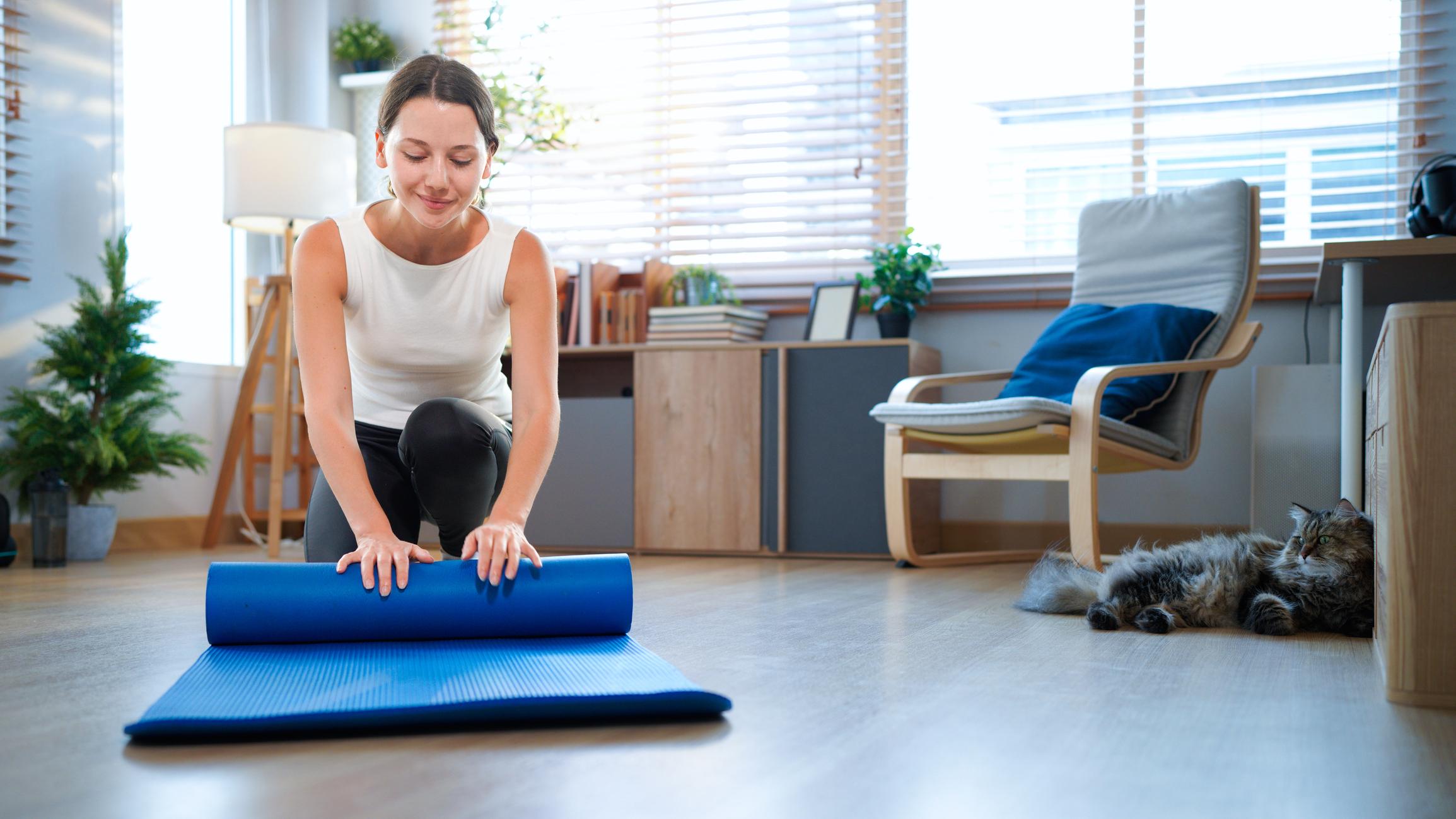
Table of Contents
And somewhere in all of that, your own practice can begin to unintentionally shrink.
Not because it doesn’t matter, but because everything else feels urgent.
This is often the point in the year where we realise that good intentions don’t automatically equal consistent practice. And what carries us forward isn’t motivation, it’s thoughtful design of our space, our schedule, and the way we support ourselves as a whole.
Let Your Space Work for You
One of the simplest ways to cultivate consistency with your practice is to make your mat and practice space clear and visible.
At home, that might mean leaving your mat rolled out in a quiet corner instead of tucked away in a cupboard. Keeping your blocks stacked neatly beside it; a bolster within reach for evening wind-down stretches.
In a studio setting, it can be just as powerful. When props are organised, accessible, and inviting, students use them. When the environment feels calm and considered, practice and the experience of ‘dropping in’ feels easier to enter.
Short Still Counts
There’s also an often self-imposed misconception that practice needs to be long to be meaningful. In reality, ten minutes before the household wakes up can be enough to shift your entire day. A few slow Sun Salutes or a long, a long and steady forward fold, three deliberate breaths in awareness.
For teachers, this can be the difference between rushing into a class and arriving grounded. For studio owners, it can be the pause that steadies you before a full afternoon of students. For practitioners, especially those balancing work, family, and community, it can be the much-needed quiet moment that reconnects you to yourself before you step back into the demands of the day.
Support Changes Everything
It’s much easier to return to something that feels good in the body. A mat with reliable grip allows you to move confidently without hesitation. Enough cushioning under the knees can transform a reluctant lunge into something spacious. Blocks and straps remove the subtle strain that builds when we push past what’s available.
For restorative practice, whether at home after a long day, or at the end of a packed studio schedule, a bolster can make ten minutes of rest deeply nourishing rather than fidgety.
Reclaim the In-Between Moments
When the year gets busy, we tend to fall into the classic trap of all-or-nothing terms. In rlation to practice: either a full class or nothing at all.
But there is so much room in between.
Standing in the kitchen while the kettle boils > a gentle forward fold.
Before unlocking the studio door > five breaths in Mountain Pose.
After the final student leaves > legs up the wall before turning off the lights.
These small actions keep the thread of practice alive in our lives, not matter how busy it gets.
And when students see you living your practice in ordinary moments, it shapes the culture of your space and community.
For Studio Owners: Your Environment Sets the Tone
March is often when numbers stabilise. New students have settled in. Regulars are back. The year feels steady.
It’s a beautiful time to refine your studio environment.
Are your mats still supportive and inviting?
Are your bolsters full and resilient, or flattened from years of use?
Are blocks available for every student, without anyone having to search?
Students may not consciously articulate it, but they feel the difference. A well-supported practice space communicates care, encourages longevity and encourages people to return.
And for you, it makes teaching easier.
Explore Yoga King’s yoga props → https://www.yoga-king.com/props.html
Let Practice Be Simple Again
March doesn’t require reinvention. It simply asks for quiet recalibration.
Roll out the mat.
Keep your props close.
Let your space support you.
And allow practice (yours and your students’) to unfold and grow from there.
10 Minute Practice to Start Your Day